
Embracing Slow Living as a Mom: Decluttering Your Schedule and Your Home
Tired of the constant hustle? Discover how embracing slow living can help you declutter your…
In our journey as parents, we are not just raising children; we are shaping future adults, guided by faith and a desire to instill timeless values. We long to give them a moral compass, a foundation of wisdom that will serve them long after they have left our homes. The book of Proverbs, a cornerstone of biblical wisdom, offers precisely this kind of guidance. It is a treasure chest filled with divine insights on kindness, diligence, honesty, and wise decision-making. However, translating these ancient, profound truths into lessons that resonate with young children can feel like a significant challenge.
This guide is designed to bridge that gap. We have curated a collection of foundational proverbs for kids, transforming them from simple verses into engaging, life-shaping experiences. You will not find complex theology here. Instead, this article provides a practical toolkit for parents and educators seeking to plant seeds of wisdom in a way that is both meaningful and fun.
Inside this comprehensive listicle, you will discover:
Our goal is to equip you to move beyond merely reading verses and start building a culture of wisdom in your home. Let's begin this beautiful journey of teaching our children to walk in God's truth.
This foundational proverb teaches children the importance of faith and humility. It gently guides them to understand that while their own ideas are important, God's wisdom and plan are perfect and all-encompassing. It’s a core concept in many proverbs for kids, laying the groundwork for a trusting relationship with God.
Proverbs 3:5-6 (NIV): “Trust in the Lord with all your heart and lean not on your own understanding; in all your ways submit to him, and he will make your paths straight.”
"Trust God with everything you've got! Don't just think you know the best way to do things. Ask God for help with everything you do, and He will show you the right path to take."
This proverb is like using a map from someone who has already been on the journey. We might think we see a shortcut, but the mapmaker (God) knows about the hidden holes or scary monsters on that path. When we trust His map, even when we don't understand it, He leads us safely to a wonderful destination.
For a child, this can apply to small and big things. Maybe they didn’t get invited to a birthday party and feel sad. We can explain that God sees the bigger picture. Perhaps He is protecting them or has a different, special plan for their day. This lesson helps build resilience and a peaceful heart, knowing a loving God is in control.
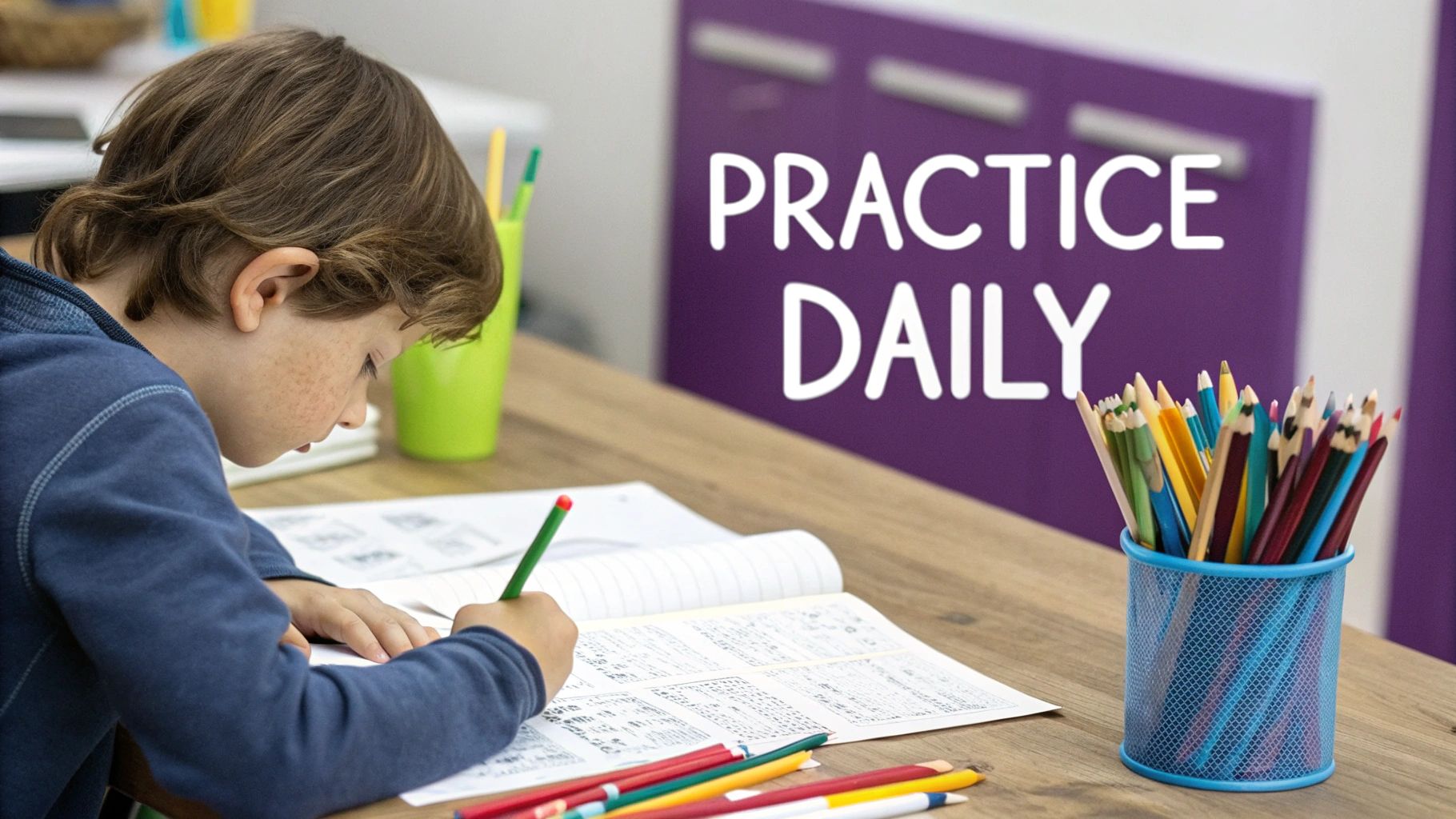
This well-known proverb teaches children the value of perseverance, patience, and dedication. It helps them understand that skills aren't usually something you are born with but are developed through consistent effort over time. This is one of the most practical proverbs for kids, as it applies to everything from schoolwork and sports to learning a musical instrument.
Proverbs 13:4 (NLT): "Lazy people want much but get little, but those who work hard will prosper."
"If you just wish for things without working, you won't get very far. But if you try hard and keep practicing, you will get better and better and have plenty of good things!"
This proverb is like building with LEGO bricks. You can't build a giant castle by just staring at the pile of bricks and wishing it would build itself. You have to pick up one brick at a time, connect it to another, and slowly, piece by piece, your amazing creation comes to life. Hard work and practice are the hands that put the bricks together.
For a child, this applies directly to learning to ride a bike, read a book, or even tie their shoes. It's frustrating when you fall or mispronounce a word. This proverb reminds them that every wobble and every mistake is one step closer to success. It teaches that effort, not just talent, is what leads to achievement, building a strong work ethic and a growth mindset.
This timeless proverb teaches the foundational moral value of truthfulness and integrity. It explains to children that being honest, even when it’s difficult or scary, ultimately leads to better outcomes and stronger relationships than lying or hiding the truth. This is a crucial life lesson among proverbs for kids, helping them build a character founded on trust and respect.
Proverbs 12:22 (NIV): “The Lord detests lying lips, but he delights in people who are trustworthy.”
"God doesn't like it when we don't tell the truth. But He is so happy and proud of you when you are honest and can be trusted!"
This proverb is like building a tower with strong, solid blocks versus building one with wobbly, weak blocks. Honesty is the strong block. Every time you tell the truth, you add a sturdy block to your tower of friendships and family relationships. Lies are the wobbly blocks; they make the tower shake and eventually cause it to fall down. People can’t rely on a wobbly tower.
When a child admits to breaking a toy or eating a cookie without permission, it’s a chance to build with a strong block. While there might be a consequence for the action, the honesty itself is praised. This teaches them that their truthfulness is more valuable than any mistake. Honesty builds trust, which is the glue that holds all our relationships together, and it's a core part of how you can teach your kids about faith.
This timeless proverb teaches children the value of diligence, punctuality, and taking initiative. It communicates that being prepared and acting early often leads to success and better opportunities. For kids, this is a practical lesson in responsibility, showing them that preparation and proactive effort are rewarded, a valuable concept found in many proverbs for kids.
Proverbs 6:6-8 (NIV): “Go to the ant, you sluggard; consider its ways and be wise! It has no commander, no overseer or ruler, yet it stores its provisions in summer and gathers its food at harvest.”
"Think about the tiny ant! No one tells it what to do, but it works hard all summer to gather food for the winter. Be smart like the ant and get your important work done early, so you are ready for what comes next!"
This proverb is like getting ready for a fun field trip. The students who pack their lunch and get their permission slip signed the night before can wake up excited and ready to go. The student who waits until the last minute might be rushed, forget something important, or even miss the bus! The "worm" represents the reward: a great spot on the bus, extra time to play before class, or simply a calm, stress-free morning.
This lesson teaches that being proactive brings peace and opportunity. When a child finishes their homework right after school, they earn more free time later without chores hanging over their head. By preparing, they are not just avoiding trouble; they are creating more space for joy and fun. God honors hard work and preparation, just like the ant who enjoys its food in the winter because it worked hard in the summer.
This proverb teaches children the vital lesson of looking beyond outward appearances to see the true value within a person or situation. It encourages them to be open-minded and kind, fighting against prejudice and snap judgments. This is a crucial concept in our list of proverbs for kids because it builds a foundation for empathy, acceptance, and forming genuine friendships.

1 Samuel 16:7b (NIV): “The Lord does not look at the things people look at. People look at the outward appearance, but the Lord looks at the heart.”
"God doesn't decide if someone is special by how they look on the outside. People see faces, clothes, and bodies, but God looks inside to see their heart. That's where the real treasure is!"
This proverb is like picking out a present. A gift wrapped in plain brown paper could hold the most amazing toy inside, while a huge, shiny box might be completely empty. God reminds us that what’s on the inside, like kindness, love, and courage, is far more important than clothes, hairstyles, or skin color.
For a child, this applies to making friends at school or on the playground. They might see a classmate who looks or acts differently and feel hesitant to play with them. We can explain that just like a plain-looking rock can have beautiful crystals inside (a geode), a quiet or different-looking person might have an incredible imagination and a loving heart. This lesson helps children build a more inclusive and compassionate worldview, seeing others as God sees them.
This classic proverb teaches children a vital lesson about conflict resolution and personal integrity. It explains that responding to a hurtful action with another hurtful action doesn't solve anything; it usually just creates a bigger problem. It’s one of the most practical proverbs for kids, guiding them to choose peace and self-control over retaliation.
Romans 12:21 (NIV): "Do not be overcome by evil, but overcome evil with good."
"If someone does something mean to you, don't do something mean back. Instead, be the one who chooses to do the right thing. Being kind is stronger than being mean!"
This proverb is like putting out a fire. If someone starts a small fire (by saying something unkind), you have a choice. You can throw more firewood on it (by yelling back), which makes the fire bigger and more dangerous. Or, you can throw water on it (by walking away or speaking kindly), which stops the fire from spreading.
For children, this lesson is crucial on the playground and at home. If a friend snatches a toy, their first instinct might be to snatch it back or push. This proverb teaches them to pause and choose a better way, like saying, “That hurt my feelings,” or asking an adult for help. It empowers them to be peacemakers and shows them that true strength lies in controlling their own actions, not in getting even.
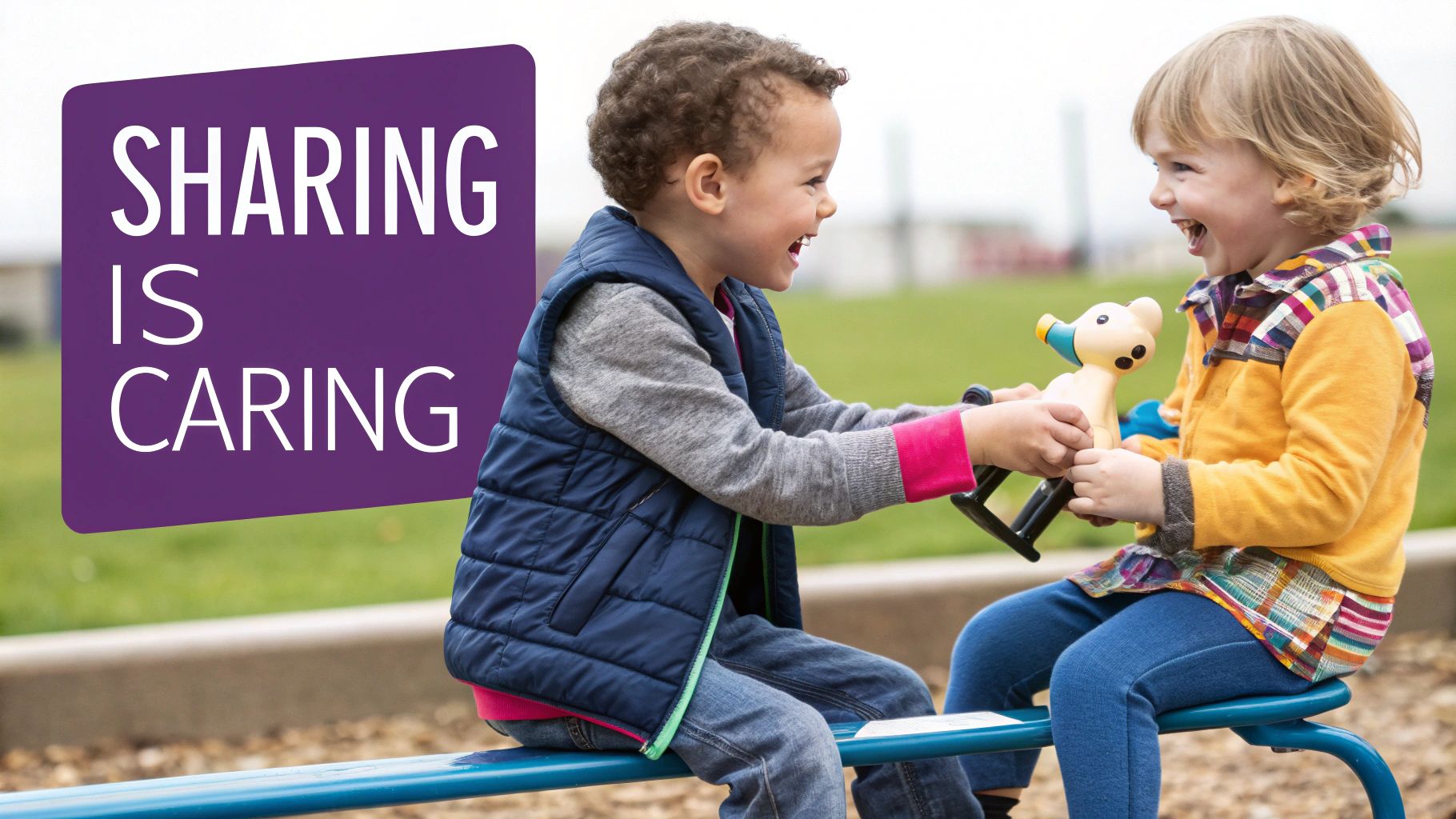
This proverb teaches children the immense value of generosity and thinking of others. It helps them understand that sharing our belongings, time, and kindness is a powerful way to show love and build strong friendships. This concept is a cornerstone of many biblical proverbs for kids, highlighting that a generous heart is a joyful heart.
Proverbs 22:9 (NIV): “The generous will themselves be blessed, for they share their food with the poor.”
"When you are kind and share what you have, you will be happy too! God loves it when you give some of your snacks or toys to someone who needs them."
This proverb is like having a big bag of delicious cookies. If you eat them all by yourself, you might get a tummy ache, and no one else gets to enjoy them. But if you share the cookies with your friends, everyone gets to taste the sweetness, and their happy smiles make you feel even happier than the cookies did! God promises that when we are generous, He blesses us back, not always with more things, but with a full and joyful heart.
For a child, this applies to everyday situations like sharing crayons at school or taking turns with a favorite swing at the park. It teaches them empathy by putting themselves in another's shoes. This practice of generosity is a key component of a gentle parenting approach and helps shape a character of compassion and kindness. You can learn more about gentle parenting strategies to reinforce these values.
This timeless proverb teaches children that what we do holds more weight and reveals more about us than what we simply say. It’s a crucial lesson in integrity and character, encouraging kids to understand that our actions are the truest reflection of our hearts and intentions. This idea is a cornerstone in many proverbs for kids, highlighting the importance of being dependable and trustworthy.
Proverbs 20:11 (NIV): “Even a child is known by their actions, by whether their conduct is pure and right.”
"Even a kid shows who they really are by the things they do. Your actions tell people if you are doing what is good and right."
This proverb is like building a tower with blocks. You can say, "I'm going to build the best tower ever!" all day long, but until you actually start stacking the blocks, there is no tower. Your words are the plan, but your actions are the building blocks. People see and trust the tower that is built, not just the one that was talked about.
For a child, this lesson is about follow-through. Promising to clean their room means very little until the toys are actually put away. Saying "I love you" is wonderful, but showing love by sharing a toy or giving a hug makes that love real and visible. This teaches children that their choices and behaviors define their reputation and that being a person of your word is a powerful and Christ-like trait.
| Proverb | Implementation complexity | Resource requirements | Expected outcomes | Ideal use cases | Key advantages |
|---|---|---|---|---|---|
| An Apple a Day Keeps the Doctor Away | Low — simple concept to introduce | Low — fruit, charts, brief activities | Greater nutrition awareness, preventive habits | Nutrition lessons, home routines, school health weeks | Memorable, motivates healthy eating |
| Practice Makes Perfect | Moderate — requires structured, repeated practice | Moderate — time, practice materials, coaching | Skill improvement, persistence, resilience | Music, sports, academic skill-building | Promotes growth mindset and effort |
| Honesty is the Best Policy | Low — discuss and model honesty | Low — stories, role-play scenarios | Stronger trust, integrity, moral development | Character education, disciplinary moments | Builds trust, reduces anxiety from deceit |
| The Early Bird Catches the Worm | Moderate — habit and routine changes needed | Low–Moderate — schedules, parental support, timers | Improved punctuality, better time management | Morning routines, time-management lessons | Enhances preparedness, reduces rush-related stress |
| Don't Judge a Book by Its Cover | Moderate — ongoing discussion and activities | Low — books, games, guest interactions | Increased empathy, reduced stereotyping | Diversity education, anti-bullying programs | Encourages open-mindedness and deeper assessment |
| Two Wrongs Don't Make a Right | Moderate — role-play and guidance required | Low — scenarios, adult facilitation | Better conflict resolution, emotional regulation | Social skills training, conflict mediation | Prevents escalation, teaches self-control |
| Sharing is Caring | Low–Moderate — guided practice with boundaries | Low — shareable items, supervision | Greater generosity, stronger social bonds | Early childhood, classroom sharing activities | Fosters empathy and community |
| Actions Speak Louder Than Words | Low–Moderate — tracking and modeling required | Low — charts, concrete tasks, examples | Increased accountability, consistent follow-through | Responsibility lessons, character-building programs | Reinforces reliability and credibility |
Bringing the timeless wisdom of Proverbs into your child's life is one of the most beautiful and lasting gifts you can offer as a parent. We've journeyed through a collection of powerful proverbs for kids, transforming ancient truths into everyday lessons filled with fun, faith, and connection. From understanding that "Actions Speak Louder Than Words" during playtime cleanup to seeing how "Practice Makes Perfect" with a new puzzle, you now have a toolbox filled with creative and meaningful ways to instill godly character.
The journey doesn't end here; it's an ongoing process of planting seeds. The activities, memory verses, and discussions we've explored are designed to be more than just one-time lessons. They are invitations to weave these principles into the very fabric of your home's culture, creating a space where wisdom is not just learned but lived.
The key to making these lessons stick is consistency and integration. It's about moving from a scheduled "Bible time" to a continuous conversation about God's wisdom throughout the day. When you see your child share a toy without being asked, you can smile and say, "That's what ‘Sharing is Caring’ looks like! You made your friend’s heart happy." When a sibling dispute arises, you have the perfect opportunity to gently guide them, reminding them that "Two Wrongs Don't Make a Right" and helping them find a peaceful solution.
These small, consistent reinforcements are incredibly powerful. They show your children that biblical wisdom isn't just for Sunday school; it's practical, relevant, and applicable to their lives right now. Your home becomes a living laboratory for faith, where your children can safely experiment with concepts like honesty, diligence, and kindness under your loving guidance.
Ultimately, the most effective way to teach these proverbs for kids is to model them. Our children are always watching, learning far more from our actions than our words. When they see you getting up early to prepare for the day, they learn the value of being an "early bird." When they hear you speak with kindness and patience, even when you're frustrated, they witness the profound truth that a soft answer turns away wrath.
Your commitment to living out these principles provides a tangible, real-world example they can see and emulate. This creates an authentic environment of faith where what is taught is also what is practiced. This consistency builds a deep-seated trust and makes the wisdom of Proverbs come alive in a way that no lesson plan ever could.
Let these proverbs be the start of a lifelong adventure into God's Word. Continue to explore its pages together, discovering new gems of wisdom and finding creative ways to apply them. As you do, you are not just teaching morals; you are building a strong foundation of faith and character that will support your children for the rest of their lives. May your home be a joyful sanctuary where God’s wisdom is sought, celebrated, and lived out with love each and every day.
Ready to cultivate a home environment rich in faith, gentleness, and purpose? Explore our library of resources at Motherhood and Homemaking for more biblically-rooted parenting guidance, homeschool activities, and encouragement for your journey. Find your next step at Motherhood and Homemaking.

