

How to Create a Peaceful Home Environment: A Practical Guide for Homemakers
Is your home a haven of peace or a source of stress? Learn realistic, cozy…

In this guide, we'll explore practical ways to make talking with God a natural part of your family's routine, covering:
Weaving prayer into the fabric of your family’s life creates a beautiful rhythm of faith, turning everyday moments into conversations with God. By establishing simple, consistent prayer times in the morning, at meals, and before bed, you’re laying a powerful foundation for your child's spiritual journey.
This guide will give you practical ways to make talking with God a natural and joyful part of your family’s routine.
Nurturing a prayer life with your children can feel like a big responsibility, but it really starts with simple, consistent actions. It's less about teaching complex theology and more about creating a safe, loving space for your child to connect with God. The real goal is to make prayer feel as natural as breathing, a constant source of comfort and strength they can turn to throughout their lives.
When we model prayer, we give our children a powerful tool for life. They learn to express gratitude, ask for help when they’re struggling, and find peace in knowing they are never truly alone. This simple practice helps build their character from a young age, fostering beautiful qualities like empathy, thankfulness, and resilience.
The small, faithful habits you build together today can have an incredible, lasting impact. Research actually confirms that a child’s experience with prayer is strongly linked to their prayer habits as an adult, and this holds true across many different cultures.
One global study involving over 200,000 people showed that praying as a child often forms a meaningful foundation for spiritual life in adulthood. It’s the consistency that matters most.
A child’s prayer life isn’t built in a single day. It’s built in a thousand small moments of turning to God together. These moments become the bedrock of their faith.
Integrating prayer into your daily schedule creates a predictable and comforting rhythm that children thrive on. The infographic below highlights the three core moments for children's daily prayers that we’ll explore in this guide.
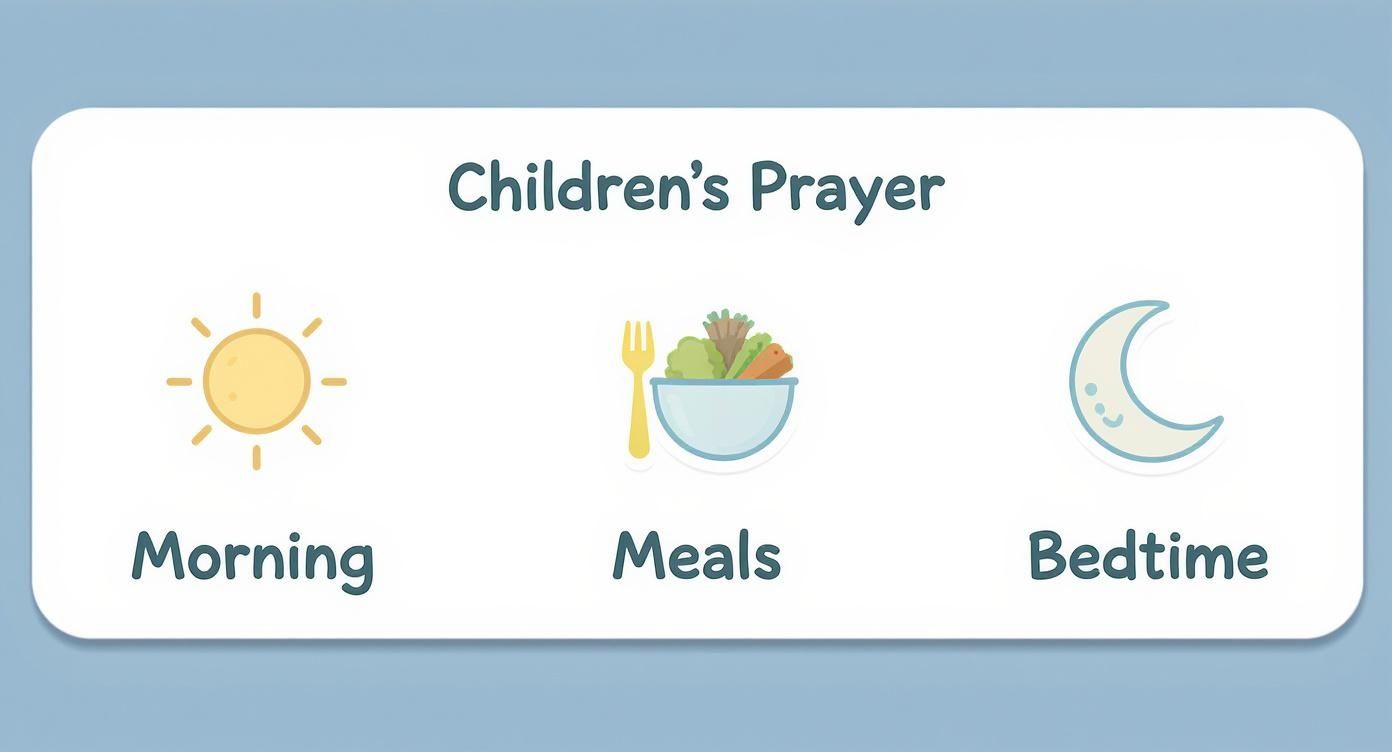
As you can see, morning, mealtime, and bedtime prayers each serve a unique purpose in a child's day, from setting a positive tone in the morning to finding peaceful closure at night.
To help you get started, here's a quick overview of how these three prayer times work together to build a strong spiritual foundation.
| Prayer Time | Purpose and Focus | Example Theme |
|---|---|---|
| Morning Prayer | Setting a positive and faithful tone for the day ahead. | Asking for guidance, strength, and a joyful heart. |
| Mealtime Prayer | Cultivating a heart of gratitude for God's provision. | Thanking God for food, family, and daily blessings. |
| Bedtime Prayer | Finding peace, comfort, and releasing the day's worries. | Asking for forgiveness, protection, and peaceful rest. |
Each of these moments offers a unique opportunity to connect with God in a way that feels natural and relevant to your child's daily experience.
Creating this spiritual rhythm strengthens not only your child’s faith but your family bond, too. It becomes a shared experience that ties your hearts closer together.
Here are some of the key benefits you'll see:
To enrich these moments, you might consider using tools that resonate with your family. For some, finding great devotional books for families can provide structure and new ideas for your prayer times.
This guide will walk you through practical steps for each part of the day, helping you lead your children with confidence and joy.
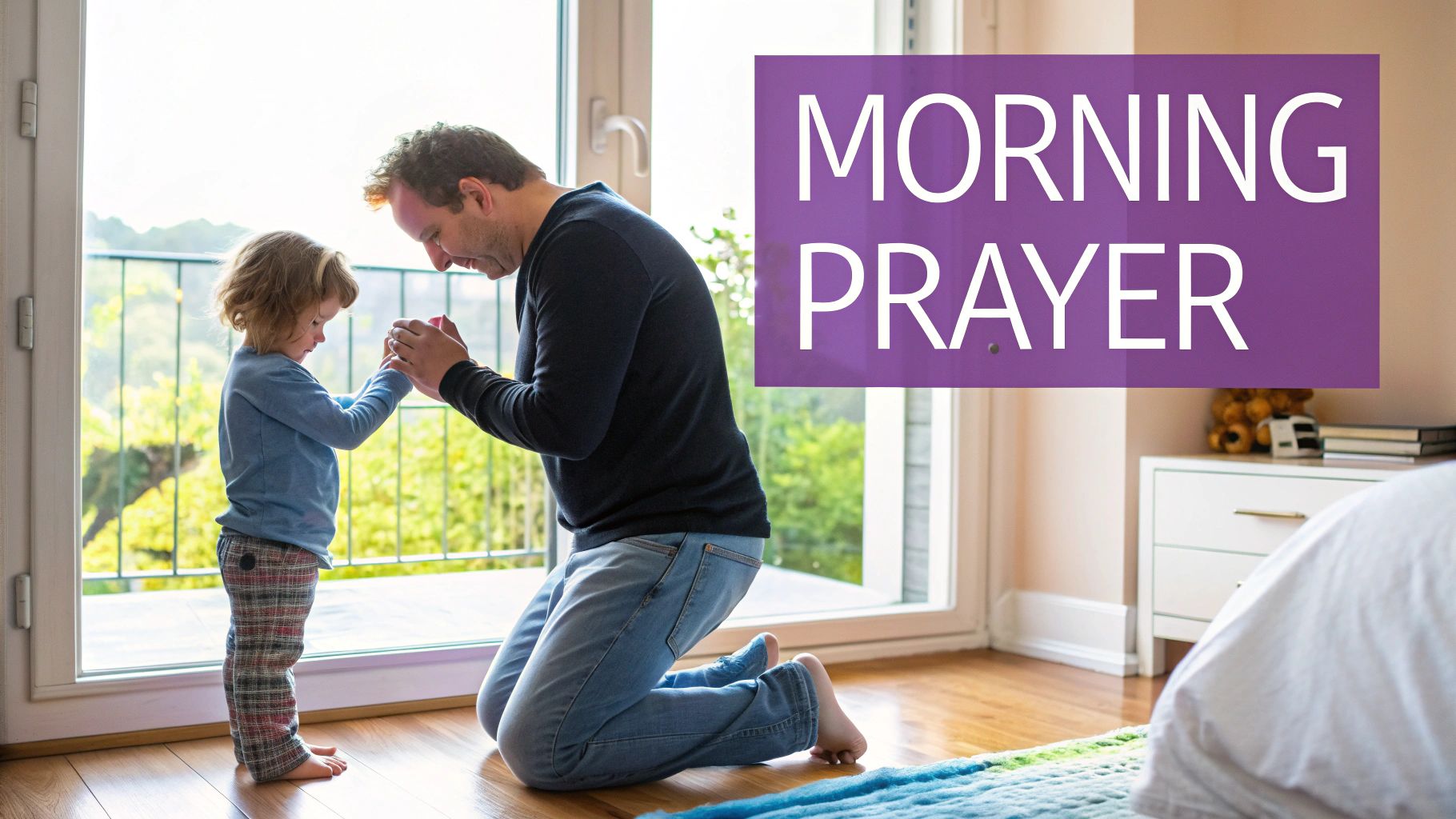
Mornings can feel chaotic, but they also offer a beautiful opportunity to set a faith filled tone for the day. Weaving daily prayers into your morning routine doesn't have to add more stress to your plate. In fact, it can become a cherished moment of connection that grounds your family before the busyness takes over.
Even a quick, one minute prayer, when done consistently, makes a profound impact. It transforms a potentially hectic start into a moment of peace and purpose. The goal here is to make this conversation with God feel as natural as pouring a bowl of cereal.
For our littlest ones, morning prayer should be simple, tangible, and full of warmth. Toddlers are learning about the world through their senses, so it helps to connect prayer to things they can see and feel. A perfect time is right when they wake up, while they're still cozy and calm in their beds.
Keep the words short and repetitive. A simple prayer of thanks is a wonderful place to start.
This small routine helps them associate waking up with a moment of peace and thankfulness, framing their day in a gentle, beautiful way.
Preschoolers are full of imagination and their language skills are blossoming. This is a fantastic age to introduce slightly more detailed prayer prompts and make it a bit more interactive. You can get them thinking by asking simple questions.
Try asking, "What's one good thing you hope happens today?" or "Who is someone at school we can pray for?" This helps them see prayer as a real conversation where they can share their own thoughts and feelings with God.
A powerful way to teach prayer is to show our kids that God cares about the small details of their day. When we pray for a fun time at the park or for help being kind to a sibling, we make faith real and personal for them.
You can also bring in simple hand motions. When you thank God for your family, you can all share a hug. When you ask for a happy day, put big smiles on your faces. This physical engagement keeps them focused and turns prayer into a joyful activity, not just a quiet one. For more ideas on structuring a peaceful start, you might find inspiration in creating a complete Christ-centered morning for your family.
As children move into elementary school, their capacity for understanding and empathy really grows. This is the perfect time for their morning prayers to become more reflective and to start looking outward. You can introduce the idea of praying more specifically for others.
Encourage them to think about their friends, teachers, and family members. You could even keep a small notebook to jot down prayer requests, like a friend who is feeling sick or a cousin who has a big test coming up.
Here are a few themes to guide morning prayers for elementary aged kids:
By incorporating these elements, you’re teaching them that prayer isn't just about their own needs, but also about caring for the people around them. This helps them develop a compassionate heart, starting each day with a sense of purpose and love.
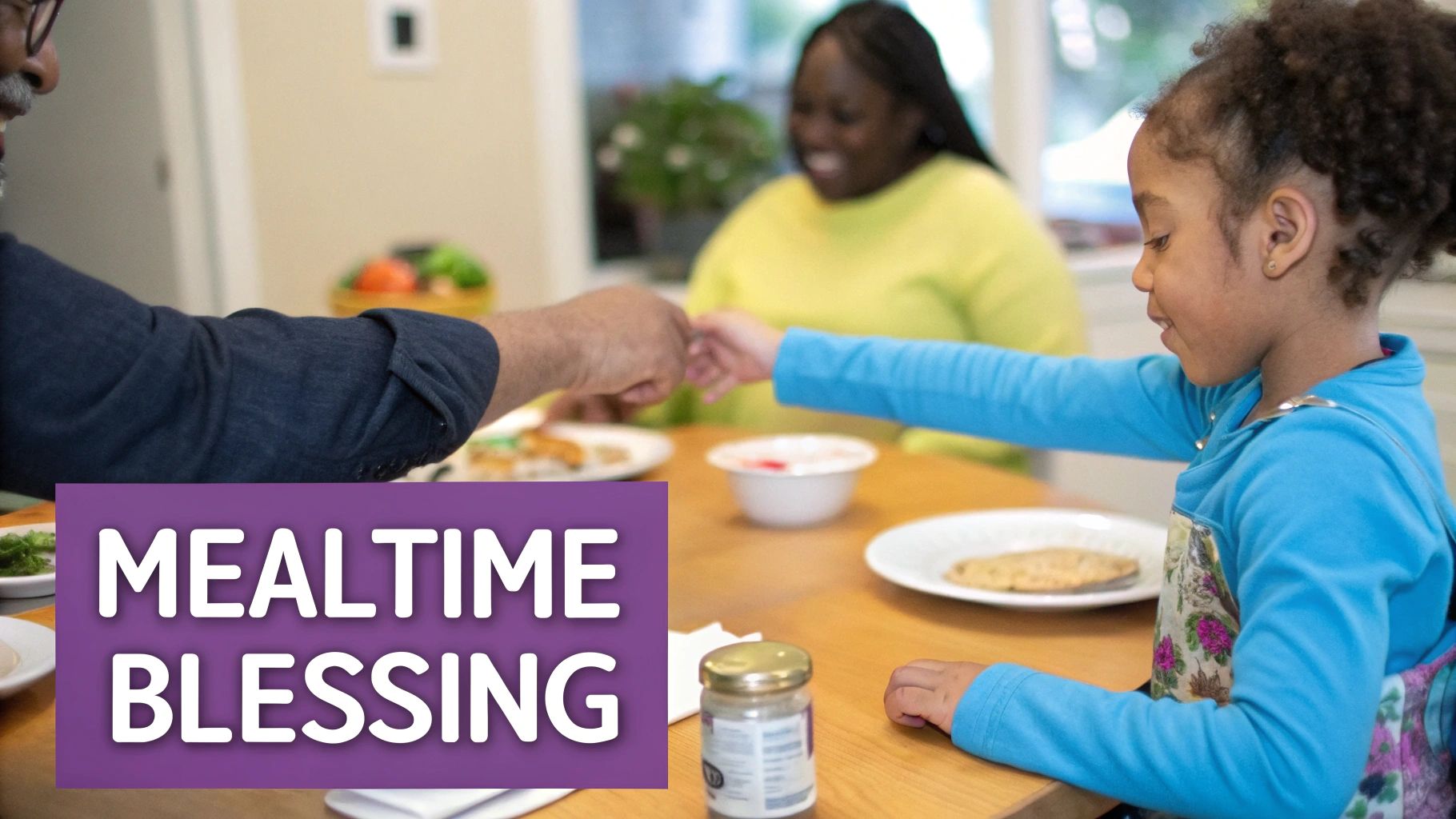
Saying grace before a meal is such a timeless tradition. It’s that gentle pause in our busy days to simply stop and acknowledge God's provision for our family. For us, it has always been one of the most natural opportunities to practice daily prayers with our kids.
This simple act teaches children about thankfulness in a tangible way, connecting the food right there on their plates to a greater source of blessings.
But mealtime prayer can be so much more than just a few memorized words. It can become a vibrant, joyful moment of family connection. By moving beyond simple recitation, we can instill a genuine spirit of gratitude that our children will carry with them for a lifetime.
When you have toddlers and preschoolers, mealtime prayers need to be short, rhythmic, and fun. Their attention spans are brief, so capturing their interest quickly is everything. This is the perfect age to introduce sung prayers or simple rhymes.
Many families enjoy singing a short blessing. A familiar tune like "Twinkle, Twinkle, Little Star" can be adapted so easily.
This simple song is easy for even the youngest children to pick up and participate in. The melody makes it memorable and fun, turning prayer into a happy part of the meal routine rather than just another quiet moment they have to sit through.
As your children get older, you can introduce practices that encourage more personal and spontaneous prayer. A wonderful way we've done this is with a gratitude jar. This simple tool helps our family focus on specific blessings and makes thankfulness a year round activity.
Just find a simple jar and keep small slips of paper and a pen nearby. Throughout the week, encourage everyone to write down things they are thankful for and place them in the jar.
When your family gathers for a meal, you can pull one or two slips from the jar and include those specific things in your prayer. This transforms a generic prayer into a personal conversation with God, reflecting your family’s real life experiences.
This practice also builds a beautiful family record of God's faithfulness over time. Reading through old gratitude slips can be such a powerful reminder of past blessings and answered prayers.
Teaching children to pray at home is one thing, but what about when you are out in public or at a friend's house? These moments provide valuable opportunities to teach your children that prayer isn't confined to the four walls of your home.
When you are at a restaurant, you can still have a quiet moment of grace. A simple, whispered prayer or even just a silent moment of thanks is perfectly appropriate. This shows your children that your family's values remain consistent no matter where you are.
If you are at a friend's house, you can follow their lead. If they pray, join them. If they don’t, you can encourage your child to say a quiet, personal prayer. This teaches them both boldness in their faith and respect for others.
Having a few go to prayers can be helpful, especially on those busy nights. Here are some simple blessings you can adapt for your family.
For Toddlers:
"God is great, God is good. Let us thank Him for our food. Amen."
For Preschoolers:
"Thank you, God, for the food we eat. Thank you for the world so sweet. Thank you for the birds that sing. Thank you, God, for everything. Amen."
For School-Aged Children:
"Dear God, thank you for this delicious food and for the hands that prepared it. Thank you for this time together as a family. Please bless our conversation and help us to be a blessing to others. Amen."
Incorporating these practices helps your children see gratitude as a joyful response to God’s goodness. For further guidance on instilling godly wisdom, you might explore our helpful resources on teaching proverbs to kids, which can beautifully complement your family's prayer time.
The end of the day offers such a quiet, sacred space for connection. Bedtime provides a gentle moment for kids to reflect, helping them process their day and hand over any worries before drifting off to sleep. Creating a meaningful bedtime prayer ritual is honestly one of the most comforting traditions you can build with your child.
This quiet time together becomes a safe harbor, a place where they feel comfortable sharing their hearts, finding comfort, and feeling God’s loving presence. It’s a beautiful way to close the day on a note of peace and security.
For little ones, a predictable structure can make prayer feel less like a performance and more like a familiar conversation. A wonderful model for this is a simplified version of the ACTS prayer framework which includes Adoration, Confession, Thanksgiving, and Supplication.
You don’t need to use those big words with your kids, of course! Instead, you can break it down into four simple parts they can easily understand.
This simple flow guides them through a complete and thoughtful prayer, teaching them all the different ways we can talk to God. It moves beyond just a list of "wants" and helps them build a more well rounded prayer life from a young age.
Nighttime can often bring out big feelings for little ones such as monsters under the bed, anxiety about being alone, or fear of the dark. Bedtime prayers give us a powerful opportunity to meet those fears with faith, handing our children a real tool for finding peace.
When your child shares a fear, you can bring it right into your prayer. If they’re afraid of the dark, you might pray together.
"Dear God, thank you that you are the light of the world and that your light shines even in the darkest places. Please be with my child tonight and help them feel safe and peaceful. Remind them that you are always watching over them, even when they are asleep."
Praying about their specific worries shows them that God cares about the little things that bother them. It teaches them to turn to Him for comfort instead of letting fear grow in the quiet of the night. This practice builds incredible resilience and a deep, lasting trust in God’s protection.
Unfortunately, establishing these faith building habits is becoming less common. Research on youth prayer habits reveals that younger generations engage in daily prayer less than older ones, with an average global gap of 9 percent. Introducing meaningful rituals like bedtime prayer can help bridge this gap for your own children. You can explore the full research about youth prayer habits to understand these shifts better.
Let's be real because some nights we are just plain tired and short on words. Having a few go to prayers ready can be a lifesaver. Here are some examples you can use as a starting point and personalize for your family.
For Toddlers and Preschoolers:
"Now I lay me down to sleep, I pray the Lord my soul to keep. Watch over me all through the night, and wake me with the morning light. Amen."
This classic is simple, rhythmic, and so easy for the youngest children to memorize. It’s a classic for a reason!
For Elementary Aged Kids:
"Dear God, thank you for this day. Thank you for my family, my friends, and my warm bed. Please forgive me for the times I was not kind today. Please watch over us all as we sleep and keep us safe from harm. Help me to wake up refreshed and ready for a new day. Amen."
This prayer follows that simple ACTS model, guiding them to reflect, express gratitude, ask for forgiveness, and seek protection. It creates a complete sense of closure for their day.

Teaching our kids to pray is one of the most beautiful parts of parenthood, but let’s be honest because it’s not always a smooth ride. Some days, your heartfelt efforts will be met with wiggles, eye rolls, or tough questions that completely catch you off guard. If this is you, please know you're not alone. It's a totally normal part of building a family prayer life.
These little hurdles aren't signs of failure. Think of them as opportunities. They’re invitations to get creative, lead with empathy, and really deepen your child's understanding of what it means to have a real, living relationship with God.
We all know that repetition can sometimes lead to boredom, especially for young kids. When you feel their attention starting to drift during prayer time, it might be a signal to mix things up. The goal is to make prayer feel like a vibrant conversation, not just another chore to check off the list.
A super simple idea is to create a special prayer spot in your home. It doesn't have to be fancy. Maybe just a cozy corner with a few extra cushions or a specific comfy chair. Having a dedicated space can signal to your child that it’s time for a quiet, special moment with God.
Here are a few other things we've tried that really work:
Sooner or later, your child is going to ask a question that stops you in your tracks. It might be, "Why didn't God answer my prayer for a puppy?" or something much heavier. These moments can feel intimidating, but they’re actually a good sign because it means your child is thinking deeply and taking their faith seriously.
When these questions come, the most important first step is to just listen with empathy. Before you jump to an answer, acknowledge their feelings of disappointment or confusion. You could say something like, "I know you really wanted that, and it’s so disappointing when we don't get what we prayed for."
Your compassionate response is more important than having a perfect theological answer. You are teaching your child that God is a safe place for all their questions and feelings, even the messy ones.
When you do respond, keep it simple and honest. You might explain that God always hears us, but His answers aren't always "yes." Sometimes the answer is "wait," and sometimes it’s "no" because He has a different, bigger plan that we just can't see yet. It’s also completely okay to say, "That's a great question, and I don't know the answer, but we can look for it together."
Ultimately, one of the most powerful tools you have is your own prayer life. Our children learn so much just by watching us. When they see you turning to God in moments of joy, stress, or gratitude, they learn that prayer is a natural and vital part of everyday life.
Let them overhear you praying for them by name. Let them see you pray for patience when you’re feeling frustrated or for wisdom when you’re facing a big decision. Your authentic, real life example speaks volumes. It shows them that faith isn’t just for bedtime rituals, it's for all of life's ups and downs, and that’s what helps build a lasting foundation for their own spiritual lives.
This idea of praying together isn't just for families; it's a global movement. Take the 'One Million Children Praying the Rosary' campaign, which started back in 2005 and has grown incredibly since. It's a beautiful picture of young believers all over the world connecting through prayer. You can find out more about this inspiring global prayer campaign.
As you start building a routine of daily prayer with your family, questions are bound to pop up. This journey of faith is filled with beautiful moments, but it's okay if there's some uncertainty, too. My goal here is to give you clear, helpful answers to empower you as you guide your children in their spiritual walk.
Feeling confident in your approach makes all the difference. Knowing how to handle these common situations will help you lead with grace and consistency, even on the tough days.
You can start from the very beginning, even with your newborn! Simple, repeated prayers during key moments like bedtime or before meals help build a familiar and comforting rhythm. This early exposure makes prayer feel like a normal, natural part of life long before they can even speak the words themselves.
For toddlers, I've found it's best to focus on thanking God for tangible things they understand, like their family, favorite toys, and yummy food. As they grow, their understanding of God and prayer will naturally deepen. The goal isn't a formal lesson; it's to make prayer feel like a simple conversation from the very start.
When you're talking about prayer with a little one, simple concepts are your best friend. I often describe prayer as “talking to God like a friend” or “sending a love note to heaven.” Another sweet way to put it is “saying thank you for all the good things we have.”
For the youngest children, it’s more about the action and the feeling than the theology.
You could say, “Let’s close our eyes and think about how much we love Grandma, and then we'll tell God.” Keeping the language concrete and personal helps them connect without getting lost in abstract ideas.
This approach makes prayer feel accessible and heartfelt, building a positive foundation from their earliest years.
Starting is the most important part, and you absolutely don't need a deep theological background to begin. Your genuine effort is what will mean the most to your children. Be authentic and just start small.
A simple grace at mealtime focused on gratitude is a perfect, gentle entry point.
You could try something warm and straightforward, like:
Be honest with your kids. It’s perfectly okay to say, “This is something new I want our family to try together.” Your sincerity will create a beautiful and authentic foundation for your family’s prayer life.
While consistency is key for building routines, forcing a child to pray can backfire, creating negative feelings and resistance. If your child refuses, try to understand why. Are they tired, distracted, or just testing their independence? It happens!
Instead of turning it into a power struggle, offer a gentle alternative. You might say, “Okay, you don’t have to say the words right now, but please be quiet and respectful while the rest of us pray.”
This approach maintains the family routine without forcing participation. Often, once the pressure is off, a child will choose to join in again on their own terms. It respects their feelings while still honoring the importance of family prayer time.
At Motherhood and Homemaking, we are here to support you with practical, faith centered resources for every season of motherhood. Explore our blog for more encouragement and tips to build a joyful, Christ-centered home.

