Gentle Homeschool Curriculum for Kindergarten
A gentle, Christ centered homeschool curriculum for kindergarten is less about rigid academics and more…
Choosing a christian homeschool curriculum for preschool is about so much more than ABCs and 123s. It’s a beautiful opportunity to gently weave faith into the very fabric of early learning, nurturing your child's sweet spirit right alongside their growing mind.
Table of Contents
More and more families are feeling called to bring education home, especially during these precious and formative preschool years. A Christ centered approach isn't just another subject to check off the list; it's the heart behind every lesson, from tracing letters to counting colorful blocks. This journey is all about building a foundation of faith, curiosity, and a deep love for God as they take their first academic steps.

Think of this guide as your friendly roadmap. We'll walk through what makes these programs so special, explore key learning goals to aim for, and help you create a joyful, gentle rhythm for your days. My hope is to help you build a loving educational environment where spiritual growth and academic discovery can blossom together.
Think of your preschool homeschool as planting a garden. You're not just teaching your child to identify the flowers (the academics). You are tending the soil, providing sunlight, and nurturing the roots so the whole plant can flourish in God’s incredible love.
This method seamlessly integrates biblical truths into everyday learning. Instead of having "Bible time" separate from "school time," the two become one. A lesson on the letter 'A' might naturally lead to the story of Adam and Eve. Counting to seven could be a perfect chance to talk about the days of creation. This approach makes faith a constant, natural part of your child’s world.
Deciding on a christian homeschool curriculum for preschool is an intentional choice to put your child’s spiritual development first. It's a decision many families are making. Homeschooling has seen steady growth, with about 2.3 million homeschooled children in the U.S. by 2016, and a significant number of those families specifically seek out faith based materials.
This approach offers some truly unique benefits for your little one:
Beginning this homeschool journey is just as much about preparing your own heart as it is about buying supplies. It’s about creating a space where your child feels safe, deeply loved, and encouraged to ask big, wonderful questions. You don't need a picture perfect classroom! A cozy corner for reading, a simple table for crafts, and an open, grace filled heart are your most important tools.
As you prepare, you might consider incorporating family devotionals to enrich your home's spiritual foundation. You can find some wonderful ideas in our list of favorite devotional books for families.
Remember, the goal is to foster a love for learning and a love for the Lord that will last a lifetime. This is your chance to create a truly personalized and meaningful start to your child’s education.
When you first open up a Christian homeschool curriculum for preschool, you’ll discover it’s so much more than a stack of academic worksheets. These programs are lovingly designed to blend foundational learning with spiritual nourishment, creating a beautiful tapestry where faith and education are woven together. Imagine your child learning the letter 'B' not just as a shape, but through the sweet story of baby Moses in his basket.
This integrated approach is the very heart of a faith based early education. Instead of setting aside a separate "Bible time," the truth of God's Word is sprinkled throughout every lesson. A lesson on colors might lead to a conversation about the rainbow God set in the sky as His promise. Counting practice can easily connect to the animals entering Noah's ark two by two.
The goal here is to nurture your child's entire being. These curricula are designed to cultivate a heart that is tender toward God while also gently preparing them for kindergarten. Every little discovery, whether it’s learning a new number or a new nursery rhyme, becomes an opportunity to see God’s goodness and creativity all around them.
You'll find that many of these programs are built around thematic units. While every curriculum has its own unique style, the core purpose is the same: to center learning on Bible stories or Christian character traits and then build academic skills around those central themes.
For example, a unit on the week of Creation might include:
This method makes learning feel connected and full of purpose. It helps your preschooler understand that God isn't just a character in a storybook but the real, living Creator of the world they can see and touch every single day.
A Christian homeschool curriculum for preschool is like a treasure map where every academic skill learned is a clue that leads your child closer to discovering the incredible love and wonder of God.
This gentle immersion helps build a biblical worldview right from the very beginning. It frames their understanding of life, relationships, and the world around them through the lens of Scripture, a foundation that is truly priceless as they grow and encounter new ideas.
While each curriculum is unique, you can generally expect to find a few key components designed to support both you and your little one. These materials work together to create a rich, engaging learning experience that’s easy for moms to lead.
Most curricula are thoughtfully organized to make your job as a parent teacher as simple as possible. Though they vary, they all share the goal of weaving biblical principles into early childhood education. For instance, a program like 'Little Hands to Heaven' is Bible based and structured into 33 units, with daily plans focusing on biblical stories from Creation all the way to Paul’s journeys. You can find out more about these and other excellent preschool curriculum choices for homeschool.
These lesson plans are almost always packed with a mix of activities to keep curious little minds engaged.
You’ll typically find a good balance of:
These elements work in harmony to create a wonderful multisensory learning environment. Your child isn't just hearing about their faith; they are seeing it, touching it, and singing about it. This holistic approach makes learning joyful and helps those precious spiritual truths take deep root in their hearts. It’s a beautiful way to begin their educational journey.
When you choose a Christian homeschool curriculum for preschool, you’re doing so much more than just teaching ABCs and 123s. You’re nurturing your child’s whole being: heart, mind, and soul. Setting gentle, age appropriate goals gives you a beautiful roadmap for this journey.
Think of these goals less like a rigid checklist and more like loving guideposts. They help you celebrate every small victory and ensure you’re fostering growth in every area of their development, all through a faith centered lens. It’s about celebrating their unique pace and God given design, not pushing them to perform.
This approach sees the Bible as the very core of your homeschool, supporting the three main pillars: academics, spiritual growth, and character development.
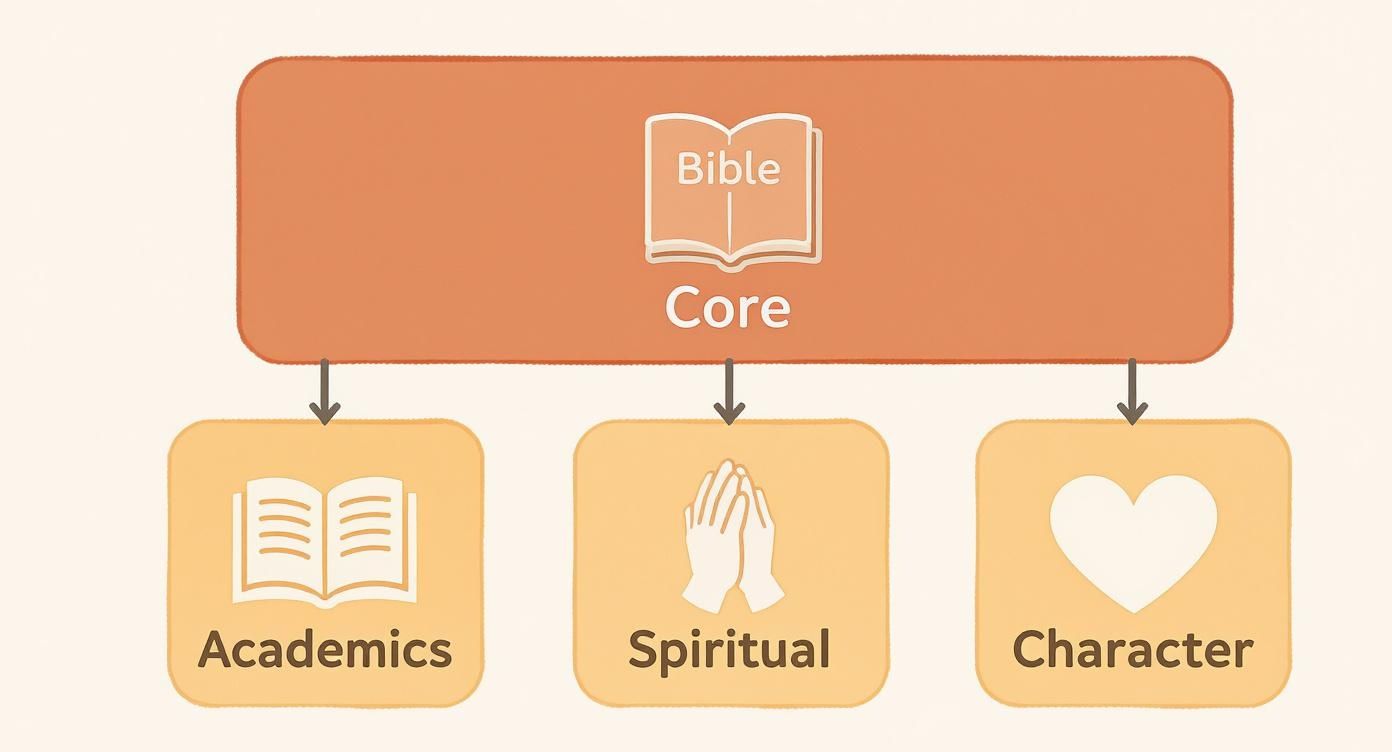
This visual is such a powerful reminder that every learning goal, whether it’s learning a letter or learning to share, can be rooted in the truth and love we find in Scripture.
Before we dive into specific goals, let's look at how these developmental areas beautifully intertwine with a Christian focus.
This table breaks down some key milestones for preschoolers and shows just how naturally faith can be woven into each area of their growth.
| Developmental Domain | Typical Milestone | Christian Integration Example |
|---|---|---|
| Spiritual & Character | Begins to understand simple moral concepts (right/wrong). | Reading a Bible story about honesty (Ananias & Sapphira, simplified) and talking about why telling the truth pleases God. |
| Cognitive (Thinking) | Recognizes basic shapes (circle, square, triangle). | Going on a "God's Shapes Hunt" to find circles in flowers or triangles in leaves, thanking God for His creative design. |
| Language & Literacy | Recognizes some letters, especially in their own name. | Creating their name with craft supplies while saying, "God knows your name and has a special plan for you." |
| Social & Emotional | Begins to show empathy and comfort others. | When a sibling is sad, encouraging your child to give a hug and say, "I can pray for you," modeling compassion like Jesus. |
| Gross Motor | Hops, jumps, and stands on one foot for a few seconds. | Playing a game like "Jump for Jesus!" or "Hop if you love God," connecting physical joy with spiritual praise. |
| Fine Motor | Uses child safe scissors to cut a line. | Cutting strips of paper to make a colorful prayer chain, with each link representing someone or something to pray for. |
| Self-Care | Can wash and dry their own hands. | Singing a simple prayer or worship song (like "Jesus Loves Me") while washing hands to mark the time and fill it with praise. |
As you can see, faith isn't a separate subject. It's the thread that ties everything together, making learning meaningful and whole.
At the very heart of your preschool homeschool are the goals that nurture your child’s spirit. This is where you lay the foundation for a lifelong relationship with Jesus. It's far less about memorizing facts and much more about helping them experience God's love in a real, tangible way.
Your aims here can be simple and sweet:
Character goals flow so naturally from this spiritual foundation. You can even focus on one virtue a week or month, like kindness or patience, using Bible stories and real life moments as your guide.
Cognitive goals for preschoolers are all about sparking curiosity and developing those foundational thinking skills. It's truly amazing to watch their little minds absorb information through play and exploration! This is where you introduce the building blocks of academic learning in a fun, completely pressure free way.
A few key areas to focus on include:
Language development is happening constantly at this age. Your main goal is to create a rich environment filled with words, stories, and songs. Encourage them to tell you about their day, listen with delight to their wonderful (and sometimes wild!) stories, and read aloud to them every single day.
Nurturing your preschooler's mind is like tending a small garden. You plant seeds of knowledge through stories and play, water them with encouragement, and watch them blossom with understanding in God's perfect timing.
Homeschool provides such a wonderful, safe space to practice important social skills. These goals focus on helping your child learn to interact with others in a loving, respectful way that reflects Christ's love.
Simple social goals could be:
Finally, motor skills and self care are all about helping your child gain independence and confidence in their physical abilities. Gross motor skills involve big movements like running, jumping, and climbing, while fine motor skills use the small muscles for things like holding a crayon or using scissors.
Encourage lots of active play and provide opportunities for them to practice buttoning a shirt or pouring their own water. These small steps toward independence are huge milestones for a preschooler and build a foundation for a lifetime of capable service.
The idea of creating a schedule for a preschooler can feel a little intimidating, but I want you to throw out any picture you have of a rigid, minute by minute school timetable. Instead, think of it as crafting a gentle, predictable rhythm for your day. This rhythm is what gives our little ones a sense of security; it helps them know what to expect, which makes transitions smoother and learning so much more joyful.
A great preschool homeschool schedule is less about the clock and more about the flow. It naturally builds in time for cuddles on the couch, spontaneous walks to look for ladybugs, and lots of unstructured play, which is exactly how young children learn best. This approach truly honors their short attention spans and boundless energy.
The secret to a peaceful day is balance. You'll want to gently alternate between active and quiet times, and between structured activities and free, child led exploration. A simple flow helps anchor your day in connection and purpose without creating any stress.
Here’s a little peek at what a gentle daily rhythm could look like in your home:
Of course, this flow is just a suggestion. The most important thing is to find what works for your family’s unique energy and needs. For more detailed examples, you might find some inspiration in our guide to homeschooling a preschooler schedule.
Organizing your weeks around a central, faith based theme can make learning feel like one big, exciting adventure. It connects all your activities, from math to art, to a single beautiful idea, helping your child see God’s hand in everything. I've found this method is incredibly effective for making learning feel whole and meaningful.
A weekly theme gives you a wonderful framework for your lessons. It turns planning into a creative and prayerful process, allowing you to easily weave Scripture and character lessons into every little thing you touch on throughout the week.
"A thematic approach to preschool is like telling a weeklong story. Each day, you and your child get to discover a new chapter, and by the end of the week, you have a beautiful, complete picture of God's truth and creativity."
Let's imagine you choose the theme "God's Wonderful Creation" for the week. This single idea can branch out into countless fun and educational activities, all pointing back to God as the amazing Creator.
Here’s how that weekly theme could play out day by day:
This thematic approach keeps learning fresh and exciting. It transforms your homeschool from a list of subjects into a joyful exploration of God's world, creating the sweetest memories along the way.
One of the greatest gifts of homeschooling is the beautiful freedom you have to shape your child’s education. Let’s be honest, not every boxed curriculum will be a perfect fit right out of the box. The real magic happens when you lovingly adapt a program to honor your child’s unique, God given learning style and your family’s budget.
A joyful Christian homeschool isn’t measured by the cost of the curriculum on your shelf. It’s built on resourcefulness, creativity, and a whole lot of love. You have the freedom to create a rich learning environment that meets your little one exactly where they are.
Every child is knit together by God, with their own passions and pace for learning. A curriculum is just a tool; you are the teacher who knows your child’s heart better than anyone. This means you can, and should, adjust any program to make learning a delight instead of a chore.
Some children might race ahead in one area while needing a little more gentle support in another. Your role is to prayerfully watch them and make small tweaks along the way. A child who already knows their letters might need more challenging activities, while a child struggling with a concept may need it broken down into smaller, playful steps.
“Your homeschool should serve your family, not the other way around. Think of your curriculum as a wonderful set of suggestions, not a strict set of rules. You have permission to add, subtract, and modify to create a perfect fit for your child’s heart and mind.”
This is where a Christian homeschool curriculum for preschool really shines. It gives you the flexibility to nurture your child’s individual gifts and provide support where it’s most needed.
Creating a wonderful preschool experience at home does not have to be expensive. Many families find that a resourceful and creative approach actually leads to a richer, more meaningful education for their children. With a little planning, you can provide an excellent education on even a modest budget.
Your local library is your best friend on this journey. It offers a nearly endless supply of books, educational DVDs, and often free children’s programs that can supplement any curriculum beautifully. This one simple resource can save you hundreds of dollars a year.
Here are a few practical ways to homeschool on a budget:
Ultimately, your presence, your love, and your enthusiasm are the most important educational resources your child will ever have. Your creativity in using what God has already provided can turn simple moments into powerful learning opportunities, proving that a Christ centered education is about the richness of the heart, not the fullness of the wallet.
Deciding to homeschool your preschooler is such a beautiful, Spirit led journey, but it's completely normal for a few questions to pop up along the way. If you're feeling a little uncertain, you are not alone! My hope is that this section will offer some gentle reassurance and practical answers to the most common concerns I hear from moms just starting out.
My goal is to help you step forward in faith, feeling peaceful and confident in this wonderful calling. Let's walk through those lingering thoughts about readiness, scheduling, and socialization from a biblical perspective.
https://www.youtube.com/embed/j_DpdDDN_6E
When it comes to a Christian homeschool curriculum for preschool, readiness has so much more to do with your child's developmental stage than a specific age on the calendar. Instead of watching the months tick by, watch for those sweet little cues of curiosity.
Is your little one asking questions about the world God made? Do they show interest when you pull out a picture book or point to letters? Remember, preschool at home is all about playful, gentle exploration, not formal academics. If your child is ready to learn through play, stories, and snuggles on the couch, then they are absolutely ready to begin. The focus should always be on nurturing their love for God and for learning, not on hitting rigid milestones.
Trust your mama heart and the gentle leading of the Spirit. God has equipped you to know your child better than anyone. Pray for wisdom, watch for those little sparks of interest, and you will know when the time is right to begin this joyful journey together.
For our precious preschoolers, short and sweet is always the way to go. Their attention spans are still so little and developing, so any "formal" learning should happen in tiny, delightful bursts.
Many homeschool families find that just 15 to 30 minutes of focused, curriculum related activities each day is more than enough to plant beautiful seeds of learning. The rest of the day is "school," too; it just looks like play! Reading books, building with blocks, helping you in the kitchen, and exploring in the backyard are all powerful learning moments. Your entire day is an opportunity to point them to Jesus, so please don't feel pressured to create a long, structured school day.
Ah, the socialization question. This is probably the one homeschooling parents hear more than any other! The beautiful truth is, homeschooling provides some of the most wonderful and varied opportunities for healthy socialization. It allows you to be truly intentional about the friendships and social settings your child experiences.
Homeschooling gives you the incredible gift of guiding their social development firsthand, teaching them how to interact with others with kindness, compassion, and a heart that reflects Christ.
At Motherhood and Homemaking, we are here to support you every step of the way with resources that blend faith, family, and education. Discover practical encouragement for your Christ centered home at https://motherhoodandhomemaking.com.