As the season of Advent approaches, the air fills with anticipation. This sacred period of waiting and preparation offers a unique opportunity to slow down and connect with our families and our faith. While traditional devotionals and calendars are wonderful, integrating hands on creativity can deepen this experience, transforming abstract concepts of hope, peace, joy, and love into tangible memories. Creating art for Advent provides a beautiful, multisensory way for children and adults alike to engage with the story of Christ’s birth, making the journey to Christmas more meaningful and memorable. It is a chance to build traditions that nurture both the soul and the imagination.
What's Inside This Article
DIY Mixed Media Advent Calendar
Nativity Scene Illustration Series
Handmade Paper Advent Ornaments
Miniature Painting Daily Challenge
Collaborative Community Mural
Nature Based Advent Art
Digital Art Daily Challenge
Handwritten Advent Calendar with Calligraphy
This guide is designed for busy families who want to intentionally cultivate a spirit of worshipful creativity during this special time. We move beyond generic crafts to offer a curated collection of unique, faith centered art projects suitable for a range of ages and skill levels. You will not find vague ideas here. Instead, you will discover comprehensive, step by step tutorials for creating beautiful keepsakes that reflect the reverence of the season. Each project is a mini devotional, a prayer in color and form.
Inside this article, you will find:
A DIY Advent Calendar using mixed media art.
Instructions for a Nativity Scene Illustration Series.
A tutorial for Handmade Paper Advent Ornaments.
A guide to a Miniature Painting Daily Challenge.
Ideas for a Collaborative Community Mural or Installation.
Inspiration for Nature Based Advent Art using found materials.
Prompts for a Digital Art and Illustration Daily Challenge.
A project for a Handwritten Advent Calendar with calligraphy.
Each item includes detailed material lists, age specific adaptations, budget friendly tips, and direct connections to Scripture, ensuring your family’s creative time is both fun and spiritually enriching. Let's begin making this your most intentional Advent season yet.
1. A Christ Focused Mixed Media Advent Calendar
Move beyond store bought calendars and create a deeply personal and meaningful heirloom. A Christ focused mixed media Advent calendar serves as a daily invitation for your family to engage with the Christmas story through tactile art. This project transforms the daily countdown into a multi sensory experience, using a variety of materials to build a beautiful, collaborative piece of art for advent that grows each day.
Instead of just opening a door for a piece of chocolate, your child adds a new element to a growing nativity scene or a Jesse Tree. Each day’s component is tied to a specific part of the Advent narrative, making the story of Jesus’s birth tangible and memorable. This hands on approach helps solidify biblical truths in a way passive observation cannot.
This project is less about a perfect final product and more about the daily process of creating and reflecting together as a family. The goal is to build memories and understanding, one small art piece at a time.
Materials You'll Need
Base: Large canvas, poster board, cork board, or a large, sturdy piece of cardboard.
Daily Envelopes or Bags: 25 small paper bags or envelopes to hold the daily scripture and art prompts.
Step by Step Guide
Prepare the Base: Paint a simple background on your canvas or board, like a starry night sky or a desert landscape for a nativity scene.
Create Daily Packets: Number your envelopes or bags from 1 to 25. Inside each, place a small card with a short scripture verse and a simple instruction. For example, Day 1: Luke 1:30, “Do not be afraid, Mary; you have found favor with God.” Instruction: “Use blue and white felt to create Mary’s clothes.”
Assemble Daily: Each day of Advent, your child opens the corresponding packet. Read the scripture together, and then they can create and add that day's element to the main scene. Mary might be added on day 1, the manger on day 5, a sheep on day 10, and baby Jesus on Christmas Day.
Age Adaptations & Tips
For Toddlers (Ages 2 to 3): Focus on sensory experiences. Pre cut the felt shapes and let them do the gluing. Let them add cotton ball "wool" to sheep or sprinkle glitter for stars.
For Preschoolers (Ages 4 to 5): Encourage them to draw the figures or cut out simple shapes with safety scissors. They can help paint the background and arrange the elements on the board.
Budget Tip: You don't need to buy new supplies. This is a perfect project for using up leftover craft materials, fabric scraps from old clothes, and natural items found on a walk.
2. Nativity Scene Illustration Series
Elevate your daily Advent devotion by creating a series of illustrations that capture the Nativity story. This project invites you to draw, paint, or digitally create a unique piece of art each day, exploring different scenes, characters, and styles. It is a wonderful way to practice artistic skills while meditating on the biblical narrative, producing a collection of deeply personal art for advent that tells the Christmas story through your own creative lens.
Instead of a single project, this is a daily creative discipline. Each illustration can stand alone or be part of a larger, cohesive collection. This method encourages you to look closely at the details of the story, from an angel’s visit to Mary to the shepherds’ awe in the fields, fostering a deep and sustained reflection on the meaning of Christ’s birth throughout the season.
This artistic journey is about personal interpretation and contemplative creation. The focus is on the daily act of illustrating the story, allowing scripture to inspire visual expression, rather than achieving technical perfection.
Materials You'll Need
Paper or Surface: A sketchbook, watercolor paper, cardstock, or digital tablet.
Drawing Mediums: Pencils, fine line pens (like Micron), charcoal, or pastels.
Painting Mediums: Watercolors, gouache, or acrylic paints and brushes.
Digital Tools: A drawing tablet (iPad, Wacom) and art software (Procreate, Adobe Fresco).
Reference: A Bible or children’s storybook Bible for narrative inspiration.
Step by Step Guide
Plan Your Series: Outline 25 key moments from the Nativity story you want to illustrate. Create a simple storyboard or list, assigning one scene to each day of Advent. For example, Day 1: The Annunciation; Day 7: The Journey to Bethlehem; Day 25: The Adoration of the Magi.
Choose Your Style: Decide on a consistent artistic style. Will it be minimalist line art, vibrant watercolor paintings, or a folk art inspired series? A consistent style will give your final collection a unified look.
Create Daily: Set aside time each day to read the scripture for that day’s scene and create your illustration. You can add a key verse or a short reflection directly onto your artwork to integrate text and image.
Age Adaptations & Tips
For Young Children (Ages 4 to 7): Give them a simple prompt each day, like “Draw a bright star” or “Draw a fuzzy sheep.” Use a dedicated Advent sketchbook to keep all their drawings together.
For Older Children & Teens (Ages 8+): Encourage them to experiment with different mediums like watercolor pencils or digital art. They can research historical art depictions of the Nativity to inspire their own interpretations.
Budget Tip: This project can be virtually free. Use a simple notebook and a pencil, or find free drawing apps for a tablet or phone. Focus on the creative process, not on expensive supplies.
3. Handmade Paper Advent Ornaments
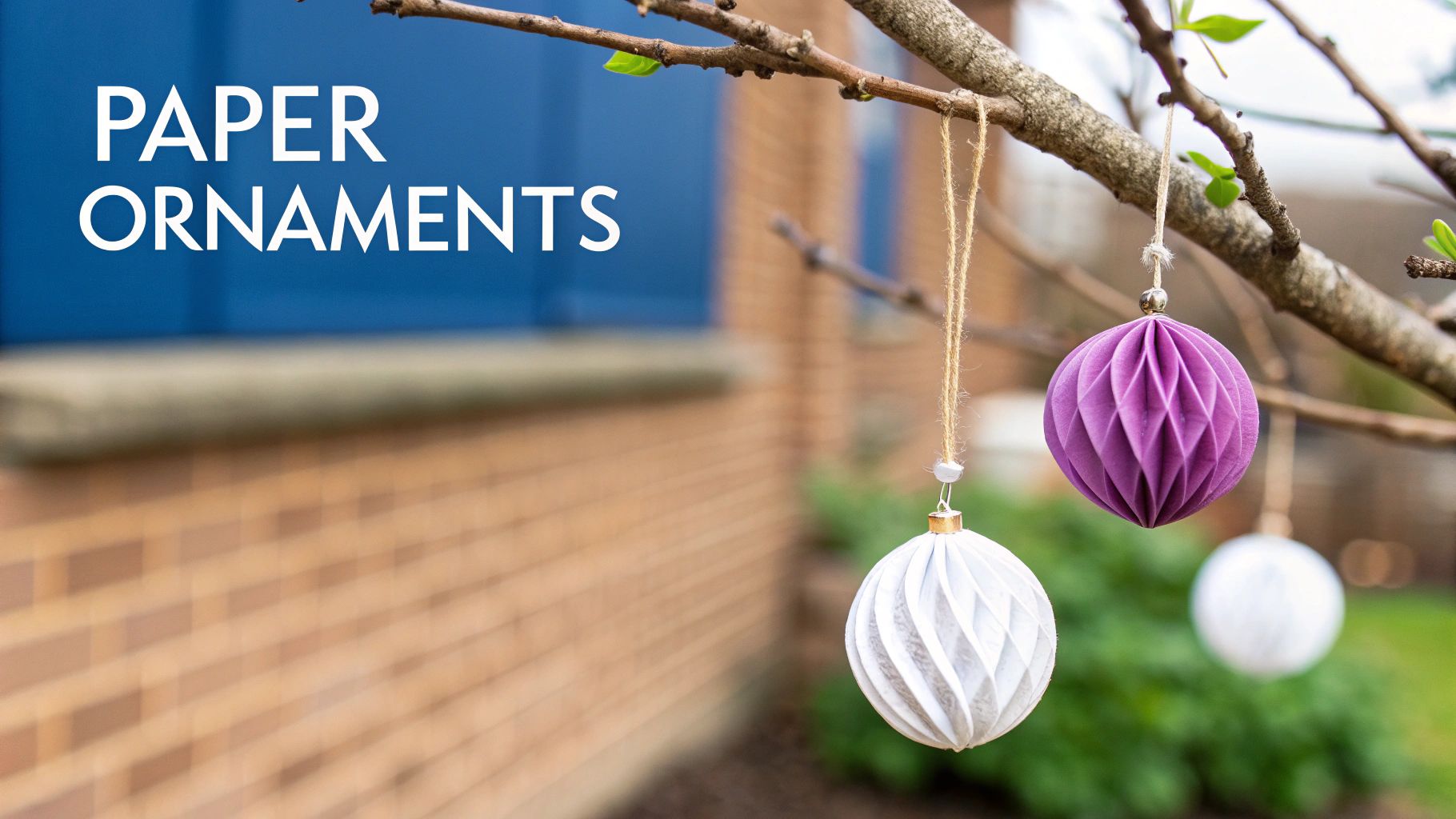
Transform simple sheets of paper into a stunning collection of daily ornaments that tell the story of Christmas. Creating handmade paper Advent ornaments allows your family to explore diverse paper craft techniques, from intricate Scandinavian paper cutting to simple origami folds. Each day, you craft a new, unique ornament that can be hung on a small tabletop tree, strung along a garland, or displayed in a window, creating a visual countdown to Christmas Day.
This project is a wonderful way to practice fine motor skills and introduce children to different forms of sculptural art for advent. As your collection of ornaments grows, so does the anticipation and the beauty of your holiday decor, with each piece representing a day of reflection and creativity.
The beauty of this project lies in its simplicity and versatility. A single sheet of paper holds endless possibilities, reminding us how God can use humble beginnings to create something magnificent.
Materials You'll Need
Paper: Cardstock, origami paper, scrapbook paper, vellum, or even recycled paper.
Decorative Elements: Fine point markers, glitter, sequins, paint pens.
Hanging Supplies: Ribbon, twine, or thin metallic cord.
Optional: Paper quilling tool, scoring board for crisp folds.
Step by Step Guide
Plan Your Ornaments: Decide on 25 ornament themes. You could create figures from the nativity (Mary, Joseph, star, angel), symbols of Advent (candle, wreath), or simple festive shapes (snowflakes, bells).
Assign a Technique: Assign a paper technique to each day or week. For example, Week 1 could be origami, Week 2 could be paper cutting, and Week 3 could be quilling or simple layered shapes.
Create Daily: Each day, focus on creating that day’s designated ornament. You can use online templates for complex designs like 3D stars or intricate snowflakes. Once finished, attach a loop of ribbon for hanging.
Age Adaptations & Tips
For Toddlers (Ages 2 to 3): Let them decorate pre cut paper shapes with crayons, stickers, or glitter glue. They can practice tearing paper to create mosaic style ornaments glued onto a cardboard backing.
For Preschoolers (Ages 4 to 5): Introduce simple folding techniques for paper fans or basic origami animals like a fish. They can practice using scissors to cut out simple shapes and glue layers together.
Budget Tip: Save old Christmas cards, wrapping paper, and even junk mail with interesting colors or patterns. These can be repurposed into beautiful and completely free ornaments.
4. Miniature Painting Daily Challenge
For those with a penchant for painting, this daily challenge offers a disciplined yet creative way to journey through Advent. A miniature painting challenge involves creating a small, focused piece of art each day, typically no larger than a few inches. This practice hones technical skills and encourages daily reflection on specific Advent themes, resulting in a beautiful collection of 24 tiny masterpieces by Christmas.
This project is a wonderful form of personal devotion, transforming a few quiet moments each day into an act of worship. Each small canvas becomes a visual meditation on a scripture, a character from the nativity, or a concept like hope, peace, joy, or love. This daily commitment to creating art for advent provides a quiet space for reflection amidst the season's hustle.
The beauty of this challenge lies in its manageable scale. A small painting is less intimidating than a large canvas, making it easier to maintain a consistent daily practice and build a creative habit.
Materials You'll Need
Surfaces: A pack of mini canvases (e.g., 3×3 or 4×4 inches), a watercolor paper pad cut into small squares, or small wood slices.
Paints: Acrylics or gouache are ideal for their quick drying time and opacity. A basic set of primary colors plus white and black is sufficient.
Brushes: A few fine detail brushes are essential. Look for sizes 0, 00, and 000 for intricate work.
Palette: A simple ceramic plate or plastic palette for mixing colors.
Easel: A small tabletop easel to hold your miniature canvas.
Prompt List: A list of 25 daily prompts tied to Advent themes (you can find these online or create your own).
Step by Step Guide
Set Up Your Space: Designate a small, consistent workspace where your supplies are easily accessible. This removes friction and makes it easier to start each day.
Follow a Prompt: Each day, consult your Advent prompt list. Prompts could be single words ("Star," "Angel," "Shepherd") or short scripture phrases.
Paint Your Miniature: Spend 15 to 30 minutes creating your small painting based on the day's theme. Focus on capturing the essence of the idea rather than achieving perfection.
Display Your Work: As you complete each piece, display them together on a shelf, mantle, or by hanging them with twine and mini clothespins to see your collection grow.
Age Adaptations & Tips
For Older Children & Teens: This is an excellent project for artistic teens to explore their style and build a portfolio. Encourage them to experiment with different techniques and share their daily creations on social media for accountability.
Budget Tip: You do not need expensive supplies. A simple set of craft store acrylics and a pad of thick paper or cardstock cut into squares works perfectly. The focus is on the daily practice, not the price of the materials.
5. Collaborative Community Mural or Installation
Extend the Advent celebration beyond your home and into your church, school, or neighborhood. A collaborative community mural invites many hands to create a large scale piece of public art that tells the story of Christmas. This project fosters a sense of unity and shared purpose, visually representing the community’s collective anticipation of Christ’s birth. The final work serves as a powerful testament to faith and togetherness throughout the season.
Each participant contributes a small, individual piece, like a painted tile or decorated panel, which then becomes part of a larger, cohesive image. This approach demonstrates how individual contributions, no matter how small, come together to create something beautiful and significant for God’s kingdom. It is a perfect example of community centered art for advent.
This project beautifully illustrates the body of Christ at work. Each person brings their unique gift to the table, and together, you create a powerful visual story that glorifies God and blesses the wider community.
Materials You'll Need
Base Panels: Multiple square canvases (e.g., 6×6 inch), sturdy cardboard squares, or wooden tiles.
Adhesives & Sealants: Strong glue or construction adhesive for mounting, clear acrylic sealant spray for protection.
Mounting Surface: A large plywood board, a designated wall, or a freestanding display structure.
Organizational Tools: Sign up sheets, instruction printouts, templates, and a grid map of the final image.
Step by Step Guide
Plan the Design: Create a simple, large scale design, such as a nativity scene, a Jesse Tree, or an Advent wreath. Divide the image into a grid, with each square corresponding to one tile.
Prepare the Kits: Create individual kits for participants. Each kit should contain a blank tile, a printed guide showing their specific section of the design, and necessary art supplies or a list of approved materials.
Host Contribution Days: Set aside specific times for community members to work on their tiles, either together at an event or by taking kits home. Document the process with photos to share the project’s progression.
Assemble and Display: Once all tiles are complete and dry, carefully assemble them onto the final mounting surface according to the grid map. Unveil the finished mural for the whole community to enjoy throughout Advent and Christmas.
Age Adaptations & Tips
For All Ages: This project is inherently inclusive. Provide simple, pre outlined sections for young children to paint, while teens and adults can tackle more detailed parts of the mural.
Organization Tip: Establish clear guidelines for the color palette and materials to ensure the final piece is visually cohesive. Providing templates or design frameworks helps maintain consistency across different artistic skill levels.
Display Tip: Plan the assembly and display logistics well in advance. Ensure you have permission to use the chosen space and have the necessary tools and volunteers to mount the final installation safely.
6. Nature-Based Advent Art Using Found Materials
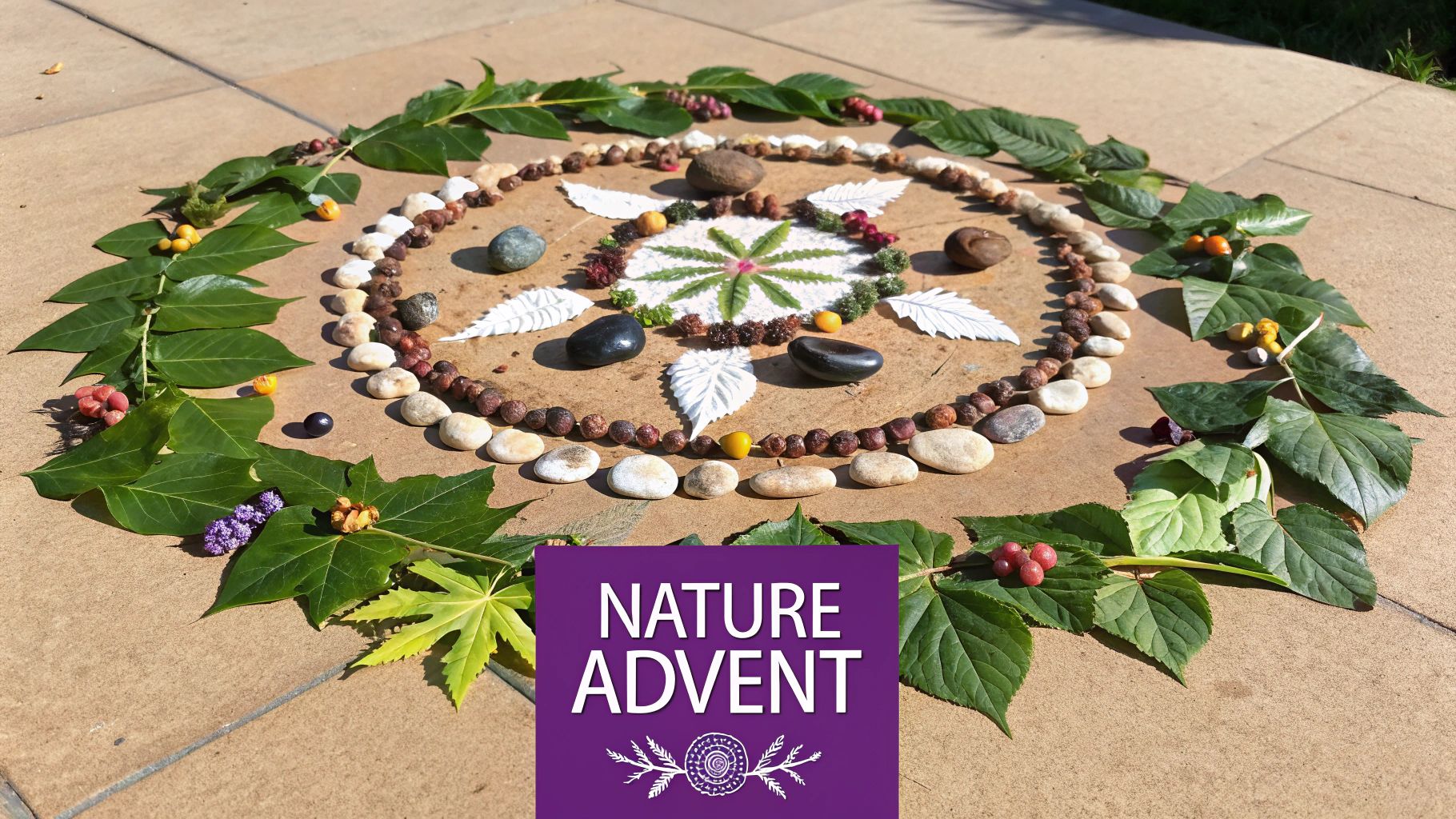
Connect with creation this holiday season by bringing the outdoors in. A nature based art project uses God’s own handiwork, leaves, stones, twigs, and pinecones, to celebrate the Advent story. This eco conscious approach encourages children to see the beauty in their natural surroundings and use it to create meaningful decorations or daily art pieces. It’s a wonderful way to practice stewardship and gratitude.
This project shifts the focus from manufactured supplies to the abundant, intricate materials found right outside your door. Each day, your family can create a transient art piece like a nature mandala or add to a larger natural sculpture. This practice fosters an appreciation for the created world and its Creator, making it a powerful and grounding piece of art for advent.
The beauty of this project lies in its temporary nature. It teaches that the process of creation and worship is just as important as the final outcome, reflecting the changing seasons and the fleeting beauty of life.
Materials You'll Need
Base: A large tray, a piece of cardboard, a tree stump, or simply a designated patch of ground outdoors.
Adhesives: Not always needed for transient art, but you can use craft glue or a hot glue gun for permanent creations.
Found Natural Elements: Pinecones, acorns, colorful leaves, small stones, twigs, branches, moss, flower petals, seeds, shells.
Collection Tools: A basket or bag for gathering materials on nature walks.
Optional: A camera to document your daily creations.
Step by Step Guide
Go on a Nature Hunt: Begin by taking a walk together. Talk about the different shapes, textures, and colors you see. Collect a variety of interesting items in your basket.
Choose a Daily Theme: Each day of Advent, select a theme related to the Christmas story or a character trait of God. For example, Day 1: A spiral of stones to represent God's eternal nature (Isaiah 40:28).
Create and Reflect: Arrange your found materials on your base or chosen spot to represent the day’s theme. You might create a star from twigs, a crown from leaves for King Jesus, or a simple heart from red berries. Talk about the verse or theme as you create together.
Age Adaptations & Tips
For Toddlers (Ages 2 to 3): The focus should be on the sensory experience of the nature walk and touching the different materials. Let them sort items by color or type (all the leaves here, all the rocks there) and place them on the base.
For Preschoolers (Ages 4 to 5): Encourage them to create simple shapes and patterns. They can make faces with stones and leaves or lay twigs down to form a manger.
Budget Tip: This is the ultimate budget friendly project as all your core materials are free. Use a camera phone to photograph your daily art, creating a digital keepsake album of your Advent journey.
7. Digital Art and Illustration Daily Challenge
Embrace the modern era of creativity with a daily digital art challenge. This contemporary approach to art for advent invites you to use software like Procreate, Photoshop, or free alternatives like Krita to create a new piece of art each day. This project is perfect for artists of all skill levels to explore themes of hope, peace, joy, and love through a digital medium, building a portfolio of faith focused work by Christmas Day.
Each day presents a new prompt tied to the Advent story, a specific Scripture, or a thematic word. You might illustrate a scene from the nativity, design a typographic verse, or create an abstract piece reflecting an Advent theme. This daily practice not only hones your artistic skills but also provides a unique, quiet space for reflection on the meaning of the season. The final collection of 25 pieces creates a beautiful digital gallery that tells the story of your personal Advent journey.
This challenge is about consistency and personal expression, not technical perfection. The goal is to set aside time each day to meditate on the Christmas story and translate that reflection into a visual form, creating a unique digital testament of your faith.
Materials You'll Need
Hardware: A tablet (like an iPad or Wacom), a computer, and a stylus.
Software: Digital art applications such as Procreate, Adobe Photoshop, Clip Studio Paint, or free options like Krita or GIMP.
Prompts: A pre made list of 25 Advent themed daily prompts (e.g., "Angel," "Star," "Hope," "Journey").
Storage: Cloud storage like Google Drive, Dropbox, or iCloud for backing up your work.
Step by Step Guide
Choose Your Tools: Select the hardware and software you are most comfortable with. Ensure everything is set up and ready before December 1st.
Create Your Prompt List: Write or find a list of 25 daily prompts. For example, Day 1: Isaiah 9:2, “The people walking in darkness have seen a great light.” Prompt: “Illustrate light overcoming darkness.”
Create and Share Daily: Dedicate a specific time each day to work on your art. Create a time lapse or speed paint video of your process to share alongside the final image on social media platforms like Instagram, ArtStation, or Twitter using a consistent hashtag.
Age Adaptations & Tips
For Kids & Beginners (Ages 8+): Use simple, user friendly apps on a tablet. Focus on basic shapes, bold colors, and completing a simple idea rather than a complex illustration. Provide clear, simple prompts like "draw a star" or "design a gift."
For Teens & Adults: Challenge yourself by exploring a new technique, brush, or style each day. Try creating a cohesive series by using a limited color palette for the entire 25 day project.
Prep Tip: Prepare your digital canvas or file template in advance. Create a folder for the project and gather any custom brushes or reference images you want to use before the challenge begins to save time each day.
8. Handwritten Advent Calendar with Illustrated Letters and Calligraphy
Elevate your Advent observance into a fine art practice with a handwritten calendar featuring illustrated letters and calligraphy. This project transforms daily devotionals, scriptures, or seasonal wishes into individual works of art. Each day reveals a new, beautifully crafted message, creating a sophisticated and deeply personal collection of art for advent that can be cherished for years.
This approach merges the reflective practice of writing with the beauty of visual art, much like the detailed work seen in illuminated manuscripts. Instead of a simple countdown, you are creating a gallery of 25 unique pieces. Popularized by calligraphy artists and independent stationery designers, this project results in a treasured keepsake that captures the quiet, contemplative spirit of the season.
This project is a beautiful way to slow down and meditate on the meaning of Advent. Each stroke of the pen and brush becomes a prayerful act, turning daily reflection into an heirloom quality creation.
Materials You'll Need
Paper: High quality, heavy weight paper or cardstock suitable for ink and watercolor (like cold press watercolor paper or smooth Bristol board).
Writing Tools: Calligraphy pens (dip pens with nibs or brush pens), fine liner pens (like Micron), fountain pens.
Inks & Paints: Black India ink, colored calligraphy inks, watercolors, or gouache.
Embellishments: Metallic inks (gold, silver), embossing powder and heat tool for raised details.
Display: A small easel, a string with clothespins, or a portfolio book to hold the finished pieces.
Step by Step Guide
Plan Your Content: Decide on the 25 messages. These could be verses from the nativity story, lines from a favorite carol, names of Christ, or personal reflections for each day.
Design and Sketch: Lightly sketch your layout for each card in pencil. Plan where the text will go and where you will add illustrations like holly, stars, angels, or candles.
Ink and Illustrate: Carefully go over your pencil guides with your chosen calligraphy pen and ink. Once the ink is completely dry, erase the pencil marks. Add color and detail with watercolors or gouache.
Add Final Touches: Use metallic inks or embossing powder to add a touch of festive shimmer to details like stars or key words.
Display Daily: Each day, reveal the new art piece. You can display them on a mantel, hang them on a wall, or collect them in a beautiful box to be read as a set on Christmas Eve.
Age Adaptations & Tips
For Older Children & Teens: This is an excellent project for artistic teens interested in hand lettering. Encourage them to develop their own style and choose scriptures or quotes that are meaningful to them.
For Adults: Invest in quality materials for a truly professional result. Consider taking a short online calligraphy or watercolor course to refine your skills before you begin.
Budget Tip: You can start with basic supplies. A simple set of brush pens and good quality cardstock is all you need. You do not need expensive dip pens and specialty inks to create something beautiful.
Keepsake Idea: After Christmas, consider binding the 25 pieces into a small book. This creates a wonderful Advent devotional you can use again each year. For more ideas on integrating scripture and art, explore Bible journaling techniques on motherhoodandhomemaking.com.
Art for Advent: 8-Project Comparison
Item
Implementation complexity
Resource requirements
Expected outcomes
Ideal use cases
Key advantages
DIY Advent Calendar with Mixed Media Art
Moderate to High (planning + varied techniques)
Mixed art supplies, prep time, storage/display space
24 to 25 diverse mixed media pieces, reusable display
Highly personal and meaningful, therapeutic, heirloom quality
Creating a Legacy of Faith and Art
As we draw this guide to a close, it is clear that creating art for Advent is so much more than a simple pastime or a way to keep little hands busy during a bustling season. The projects we have explored, from a collaborative community mural to a quiet daily illustration challenge, are invitations. They are opportunities to transform your home into a sanctuary of creativity and reflection, a space where the Advent story is not just told but truly experienced through sight, touch, and shared creation.
You have seen how a DIY Advent Calendar can become a family heirloom, each tiny door or pocket holding a piece of your shared journey. We walked through how a Nativity Scene Illustration Series allows children to personally connect with each character in the greatest story ever told. These are not just crafts; they are tangible expressions of anticipation and worship. The process of making art for Advent slows us down, compelling us to focus on the meaning behind the season amidst the commercial rush.
From Projects to Practices
The true value of incorporating these ideas lies in shifting your perspective from one time projects to enduring family practices. Think beyond a single December. How can the principles behind these activities shape your family culture year round?
Intentional Time: The commitment to a daily art challenge, whether digital or with miniature paintings, carves out dedicated, screen free time for connection. This practice of setting aside a few moments each day to create together builds strong relational bonds.
Worship Through Creativity: Making Handmade Paper Advent Ornaments or using found materials for Nature Based Art teaches our children that worship is not confined to Sunday morning. They learn that their creativity is a gift from God, and using it to celebrate His story is a beautiful act of praise.
Legacy Building: The Handwritten Advent Calendar becomes more than just a countdown; it is a record of your child’s developing skills and a testament to your family’s faith. These creations become the decorations you pull out year after year, each one sparking a memory and reinforcing the foundations of your faith.
By engaging in these art for Advent projects, you are doing something profound. You are building a visual and tactile library of your family’s faith journey. You are giving your children a hands on theology, where concepts like hope, peace, joy, and love are not just words but colors, textures, and shared moments of accomplishment.
Your Next Creative Step
Do not feel pressured to attempt every project on this list. The goal is not perfection or an overwhelming schedule. Instead, prayerfully consider which one or two ideas truly resonate with your family’s current season of life. Perhaps this is the year for simple nature crafts. Maybe next year, your older children will be ready to tackle a more complex illustration series.
The most important takeaway is to simply begin. Choose a starting point, gather your humble materials, and open your hearts to how God will meet you in the process. The messes will be temporary, but the memories and the spiritual markers you create will last a lifetime. You are not just making art; you are making disciples, nurturing a faith that is deeply personal, beautifully creative, and rooted in the wonder of the Advent season. Let this be the year your family paints, glues, and illustrates your way to the heart of Christmas.
For more resources on weaving faith, creativity, and intention into your daily routines, explore the tools and guides available at Motherhood and Homemaking. Our collections are designed to help you cultivate a Christ centered home, offering practical support for everything from seasonal activities to spiritual growth. Find your next source of inspiration at Motherhood and Homemaking.