Gentle Homeschool Curriculum for Kindergarten
A gentle, Christ centered homeschool curriculum for kindergarten is less about rigid academics and more…
When you’re trying to teach your kids about big, beautiful concepts like kindness, patience, and joy, sometimes words alone just don't cut it. That's where Fruit of the Spirit printables come in. These wonderful resources, think coloring pages, activity sheets, and memory cards, are my go to for turning abstract virtues into hands on, fun lessons for my own children.
In this guide, we will explore what the Fruit of the Spirit are, how to prepare printables for activities, and simple ways to build lesson plans. We will also cover creative crafts, games, and ideas for weaving these lessons into your daily family life.
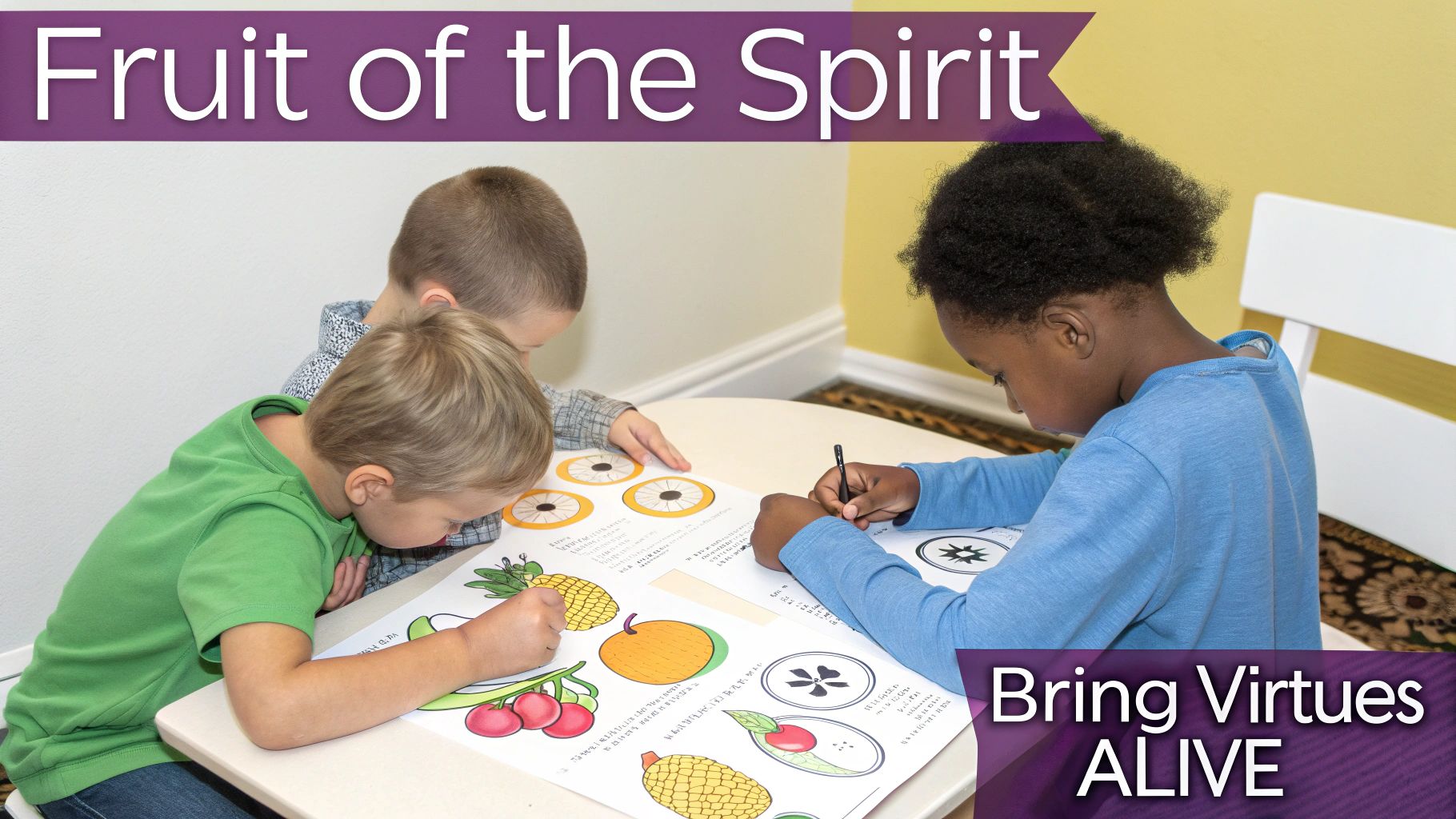
The idea of the "Fruit of the Spirit" comes straight from the Bible, specifically from Galatians 5:22-23. This passage lists nine beautiful qualities that grow in our hearts when we follow Jesus. In our homeschooling and Sunday School communities, printables that focus on these virtues have become such a blessing for teaching character development.
These nine qualities give us a perfect roadmap for nurturing our children's hearts:
Let's be honest, explaining something like "gentleness" or "patience" to a five year old can feel like a real challenge. Fruit of the Spirit printables make these big ideas visual and interactive, bridging the gap between a tricky concept and a child's understanding. They’re a simple, yet powerful, tool for parents and teachers to introduce these virtues in a way kids can truly grasp and hold onto.
Think about it: a coloring page about kindness gives your child a tangible activity to do while you chat about what it looks like to be kind to a friend at the park. Memory verse cards turn scripture memorization into a simple, fun game with pictures. This hands on method is so much more engaging than just a lecture. If you're looking for more ideas to weave faith into your daily life, you might find our guide on how to teach your kids about faith helpful.
These printables are not just busywork. They are intentional tools that plant seeds of faith and character in a child’s heart through creativity and play.
Using these resources transforms a lesson that could feel heavy into a joyful, creative activity. It helps you build sweet memories around spiritual learning, which is exactly what we want as we build a strong foundation for their faith. Whether you’re homeschooling or helping out in Sunday School, these materials are incredibly versatile and make a real impact.
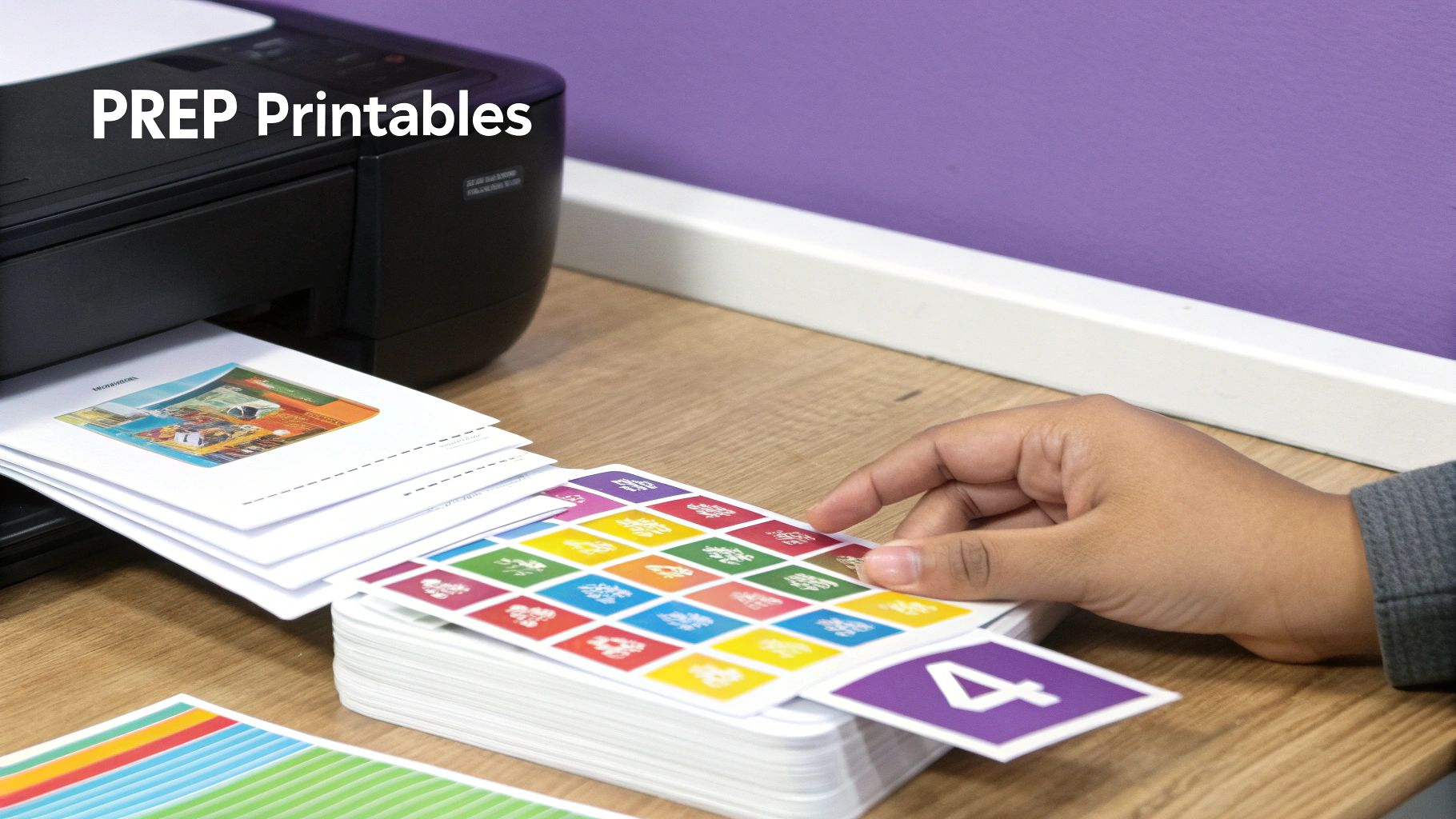
Once you've found the perfect Fruit of the Spirit printables, taking just a few minutes to prep them can make a world of difference. A little bit of upfront effort ensures your materials are vibrant, durable, and ready for enthusiastic little hands.
This small step helps your resources last through countless lessons, memory games, and art projects. Trust me, you'll be glad you did it!
For things like coloring pages or single use worksheets, your everyday printer paper is perfectly fine. But for items that will get a lot of love, like memory cards or chore charts, you’ll want something a bit sturdier.
I’ve found that a good quality cardstock is one of the best choices for durability. It holds up so well to repeated use and keeps the corners from getting bent and sad during a heated memory game. This means your beautiful printables stay looking great for much longer.
Another fantastic option for really extending the life of your printables is lamination. You can find laminating sheets at most office supply stores, and they’re surprisingly simple to use. This is a game changer for activity pages you want to use with dry erase markers, allowing for endless practice without reprinting.
To make those beautiful colors truly pop, take a peek at your printer settings before you hit "print." Look for an option that lets you select “best” or “high quality” printing. It might use a little more ink, but the rich, engaging colors are so worth it for your visuals.
For a really professional finish, especially if you’re creating posters or a special wall display, consider using a local print shop. They have amazing paper options and can produce vibrant colors that a home printer just can't match. This is a wonderful choice for creating a Fruit of the Spirit display for your homeschool room or Sunday School class.
A well-prepared printable not only looks better but also invites more interaction. Making materials durable means kids can engage with them fully without you worrying about wear and tear.
Here are a few simple tips that have saved me a ton of time:
A single Fruit of the Spirit printable can be so much more than a one off activity. I’ve found that with a little planning, it can become the anchor for an entire week of meaningful learning, turning a simple worksheet into a memorable journey for your kids.
Instead of just handing over a coloring page, try focusing on one virtue at a time, like joy or patience. When you connect a printable to stories, activities, and conversations over several days, you create a rich learning experience that really sticks.
For little ones, lessons need to be short, sweet, and full of action. Their attention spans are small, but their capacity for fun is huge! Let’s imagine you're teaching the concept of joy. Your week could look something like this, using different fruit of the spirit printables to guide your activities.
This structured approach helps reinforce the core lesson in different ways, appealing to various learning styles and making the abstract concept of a virtue tangible and fun for little ones.
Older children are ready for deeper discussions and more complex activities. They can think more critically about how to apply these virtues in their own lives, which is really the heart of the lesson. Let's plan a week around the virtue of kindness.
You can kick things off by introducing the topic with a printable word search or crossword puzzle that includes words related to kindness. This works as a great, low pressure conversation starter.
Next, you might use a printable story prompt sheet. Ask your child to write or draw a short story about a time someone was kind to them or a time they showed kindness to someone else. This helps them connect the concept to their own experiences.
Later in the week, you can introduce a "Kindness Challenge" using a printable chart. Brainstorm a list of kind acts they can do, like helping with a chore without being asked or writing a thank you note to a family member. They can put a sticker on the chart for each act completed. My kids love the satisfaction of filling up a chart!
Finally, wrap up the week by creating a Kindness Jar. Decorate an old mason jar and fill it with slips of paper where you've all written down acts of kindness you've seen each other do throughout the week. Reading them aloud together becomes a beautiful, visual reminder of how your family practices kindness every day.
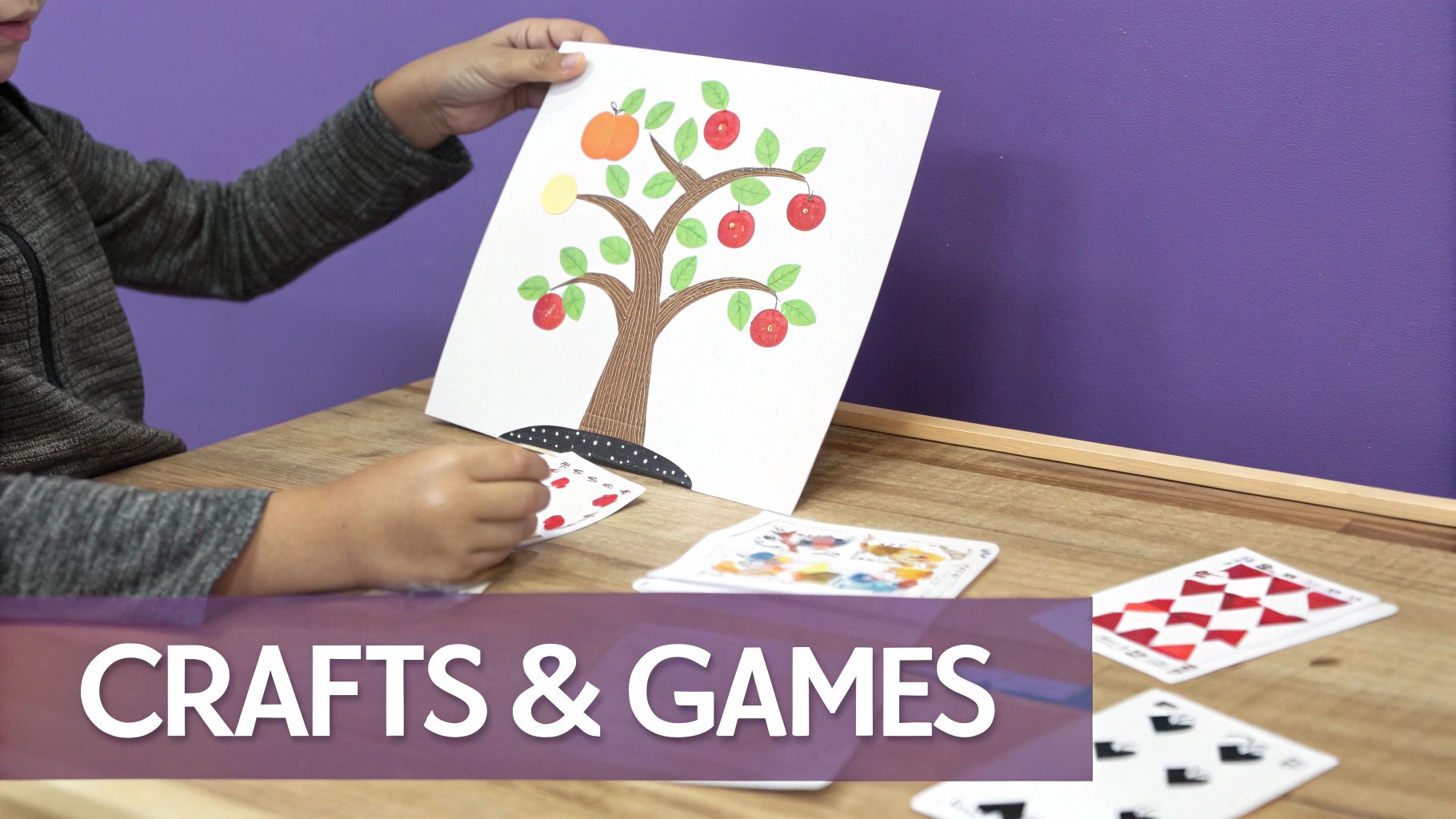
Let’s be honest: getting kids genuinely excited about virtues like patience and kindness sometimes requires more than just a talk. The best way I’ve found to bring these lessons to life is by turning them into something tangible and fun, something they can touch, create, and play with.
Using Fruit of the Spirit printables for crafts and games is a fantastic way to make these abstract concepts stick. It transforms learning into a hands on experience they’ll actually remember.
Crafts are perfect for engaging both visual and kinesthetic learners, and the best part is they don’t require a ton of prep. One of our family’s favorites is the Fruit of the Spirit tree, where the kids get to add a new paper fruit for each virtue as we learn about it.
Here are a few simple ideas to get you started:
These simple crafts become powerful, lasting visual reminders of spiritual growth, perfect for your home or Sunday School classroom.
Play is how children learn best, and turning your printables into games is a surefire way to boost retention.
A simple game of Memory Match, using cards printed on sturdy cardstock, does wonders for recalling the virtues and their matching Bible verses.
For even more ideas on making Scripture stick, check out our guide on Scripture memory games. It’s packed with fun challenges to reinforce these important truths.
I’ve noticed a huge rise in faith based digital content lately, especially on marketplaces like Etsy and Teachers Pay Teachers. On Teachers Pay Teachers, you can find tons of these resources, often selling for around $1.50 each, designed for all different age groups. It's a great place to look if you need a specific printable for your curriculum. You can see what's trending on Teachers Pay Teachers for more inspiration.
Play based learning isn't just fun; it strengthens retention and builds joyful memories around faith.
A little prep goes a long way. Setting things up quickly means more time for meaningful connection and less fuss from impatient little ones.
Picking quality supplies can make a huge difference in how engaged your kids are. A sturdy cardstock feels much more satisfying to work with than flimsy paper, and lamination adds that extra durability for repeated use.
| Material | Benefits | Notes |
|---|---|---|
| Cardstock | Durable | Great for memory cards and game pieces that get handled a lot. |
| Laminating Sheets | Reusable | Perfect for wipe clean activities or just making things last longer. |
| Washi Tape | Decorative | Use it to add a fun border or to label storage folders for your printables. |
Even something as simple as providing bright, vibrant colors can encourage kids to dive into an activity with more excitement.
The beauty of printables is how easily they can be adapted for preschoolers and early elementary kids. You can adjust the complexity to meet them right where they are.
This way, your younger children can focus on shapes and colors while older kids can engage in deeper, more reflective thinking.
Tailoring activities by age is the key to keeping every child engaged, learning, and feeling successful.
Happy crafting

The true magic of teaching the Fruit of the Spirit happens when these lessons move beyond a single activity and become part of your family’s natural rhythm. When you start weaving fruit of the spirit printables into your daily routines, you create these beautiful, organic moments for connection and spiritual growth.
It’s all about transforming everyday moments, the ones you’re already living, into opportunities to nurture your child’s heart. This approach makes learning feel effortless and integrated, rather than like another task on the to do list. You're simply planting seeds of faith in the familiar soil of your home life.
Nighttime offers such a peaceful, focused window to connect with your children. For us, bedtime routines are often the most cherished moments of the day, making them a perfect place to introduce these concepts gently. Instead of just grabbing another storybook, you can make the evening’s theme one of the virtues.
Here are a few simple ways we’ve done this:
Integrating faith into bedtime routines doesn’t have to be complicated. A simple verse or a thoughtful question can end the day on a positive, encouraging note, reinforcing the lessons in a warm and secure environment.
The start of the day and family meals are other wonderful opportunities for intentional conversations. These are times when the family is already gathered, making it easy to incorporate a quick, meaningful activity. A simple printable can serve as a visual anchor for these discussions.
For example, you could place a "peace" printable on the refrigerator. During breakfast, you might ask, “What is one thing we can do today to make our home feel more peaceful?” It’s amazing what little ones come up with!
Ultimately, the goal is to help your child see the Fruit of the Spirit not as abstract rules but as real life actions. Using printables as conversation starters helps bridge this gap beautifully.
A coloring page about goodness can lead to a chat about sharing toys with a sibling. A worksheet on self control can open a discussion about waiting for a treat until after dinner.
By linking these big ideas to small, relatable childhood experiences, you help your child understand how to actually live out these virtues. These simple practices, woven into the fabric of your family life, build a strong and lasting spiritual foundation in the most loving way possible.
Whether you’re teaching one child at your kitchen table or a lively group of twenty in a church basement, fruit of the spirit printables are wonderfully flexible. I’ve found their adaptability makes them perfect for both intimate homeschool settings and larger Sunday School classes.
The key is knowing how to scale the activities to keep every child engaged and learning.
In a homeschool environment, you have the unique opportunity to weave these lessons across multiple subjects. This creates a rich, connected learning experience that goes far beyond a simple Bible lesson, helping the virtues really sink in.
For homeschoolers, the possibilities are nearly endless. You can connect the virtue of patience to a science experiment that takes a few days to show results or discuss faithfulness while reading a historical account of a loyal figure.
Here are a few ideas we've used:
This cross curricular approach is a powerful way to make these virtues a natural part of your child's education. If you're looking for more ideas on structuring your learning day, our guide on a homeschooling schedule for preschoolers can offer some helpful structure.
Managing a group of children with varying ages and attention spans requires a totally different approach. For Sunday School teachers, the goal is to foster collaboration and manage group dynamics effectively. Printables are fantastic for this, especially when you use them for shared activities.
Instead of just handing out individual coloring sheets, consider printing a large, poster sized version of a Fruit of the Spirit coloring page. Lay it out on the floor and have all the children color it together. This encourages teamwork and creates a beautiful piece of art for the classroom wall.
In a group setting, transforming an individual printable into a collaborative project builds community and encourages children to learn from one another.
Another strategy that works really well is using printable based games with teams. Split the kids into small groups for a memory match game or a charades session where they act out the virtues. This adds a fun, competitive element while ensuring everyone gets a chance to participate.
The educational tools sector within religious communities has seen big growth recently, largely due to digital downloads like these. With global internet access reaching about 66% in 2024, resources that support both literacy and faith are more available than ever. You can find many printable Bible studies focused on the Fruit of the Spirit that help with this. Find out more about these educational tools on eBay.
By adapting your approach, you can make these lessons meaningful and memorable for every single child.
You’re probably juggling a dozen thoughts about printables, where to find them, how to make them engaging, and yes, even how to save on ink. Let’s walk through the most common questions and practical solutions I’ve gathered over years of lesson planning.
Finding Quality Free Resources
Many parents wonder where to start when free printables are the goal. I’ve found that faith based parenting and homeschooling blogs often offer beautifully crafted Fruit of the Spirit worksheets at no cost. And don’t overlook Pinterest. It’s essentially a visual search engine teeming with fresh ideas and direct download links from creators you can trust.
When simple coloring pages feel too babyish for your third or fourth grader, dial up the challenge with activities that require real thought:
I’ve watched my older students light up when they tackle a puzzle or reflect on their own experiences. It turns a worksheet into something they’re genuinely proud to share.
Finding the right printable is about matching the activity to the child’s abilities and interests. For older kids, that means moving from simple coloring to tasks that require critical thinking and personal reflection.
Ink costs can add up faster than you’d expect, but you don’t need a big budget to create sturdy, reusable materials. Here’s what works for me:
These small tweaks turn your initial printing session into a long term investment.
At Motherhood and Homemaking, we’re passionate about equipping you with faith filled tools for your household. For more encouragement and practical resources, visit Motherhood and Homemaking.