Christian homeschool curriculum for preschool: A quick guide
Choosing a christian homeschool curriculum for preschool is about so much more than ABCs and…
A gentle, Christ centered homeschool curriculum for kindergarten is less about rigid academics and more about connection, wonder, and exploration. It’s about creating a joyful foundation for learning that nurtures your child’s heart and mind through play, stories, and shared experiences, not trying to replicate a classroom at home.
In This Guide
Welcome, sweet friend, to the beautiful journey of homeschooling your kindergartener. This is such a special adventure, and it’s all about embracing a gentle approach that fans the flame of your child's natural love for learning. Let's explore how to shift away from a rigid, school at home model and toward a flexible, life giving rhythm that truly fits your family.

In our gentle homeschool, success looks a little different. Instead of focusing on grades or test scores, we measure progress by the joy and curiosity we see in our children. It’s about seeing their eyes light up when they discover a ladybug on a leaf or when a Bible story truly touches their heart.
This gentle approach fits so beautifully with positive parenting strategies that put relationship and connection first. You can learn more about how to apply these principles in our guide on gentle parenting techniques. This mindset helps create a peaceful learning atmosphere where little ones feel safe to explore, ask questions, and even make mistakes.
The primary goal of a kindergarten homeschool curriculum is not to fill a child's head with facts, but to cultivate a love for God, a love for others, and a deep, lasting love for learning itself.
Before we dive into the details, here's a quick look at the core components we'll be building.
Here is a summary of the core components for building your gentle, Christ centered homeschool curriculum for kindergarten.
| Curriculum Component | Focus Area | Key Goal |
|---|---|---|
| Christ Centered Focus | Integrating faith into all subjects | Nurturing a biblical worldview and love for God. |
| Learning Through Play | Hands on, exploratory activities | Fostering curiosity and natural development. |
| Reading & Storytelling | Living books, read alouds, phonics | Cultivating a lifelong love for reading and stories. |
| Math & Logic | Concrete, real world math concepts | Building a foundational understanding of numbers. |
| Nature & Science | Exploring God's creation firsthand | Inspiring wonder and a heart of stewardship. |
| Gentle Rhythms | Flexible, connection based routines | Creating a peaceful and predictable learning environment. |
This table gives you a bird's eye view, but the real magic is in how we weave these elements together with intention and love.
Weaving faith into every single subject is the cornerstone of this entire philosophy. This doesn't just mean adding a Bible lesson to your day. It’s about seeing God’s hand in everything you study, from the smallest insect to the biggest number.
When we frame education this way, we're not just teaching academics. We are building our children's character and shaping a biblical worldview from the very beginning. This approach will help you feel confident and prepared as you start your homeschooling journey, knowing your efforts are nurturing your child’s whole being, spirit, soul, and body.
Before you ever pick out a single book or plan an activity for your homeschool curriculum for kindergarten, it’s so important to pause and set some gentle, age appropriate goals. This isn't about creating a rigid checklist to stress over. Think of it more as a prayerful roadmap for your year, a way to outline all the beautiful ways you hope to see your child grow, both in what they know and in their love for the Lord.
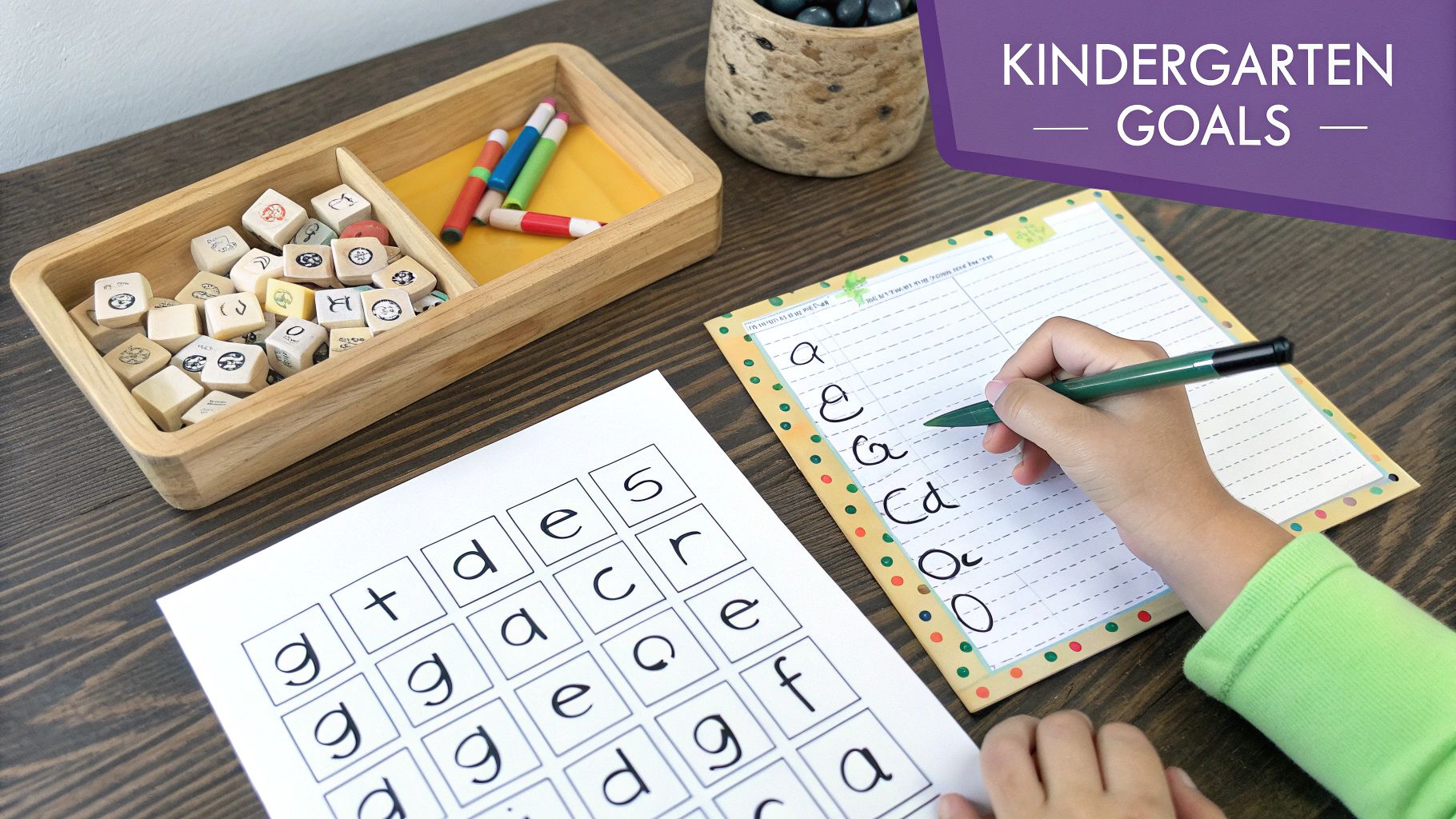
These goals will become your anchor. They’ll help you make intentional choices about the stories you read, the games you play, and the experiences you share in your home. The real focus is on nurturing a genuine love for learning, not on performance or comparison.
The heart of language arts in kindergarten is simply to cultivate a deep love for stories and communication. We want our little ones to see reading as a delightful adventure, not a chore to be checked off a list.
Your home is the first and most important school of character. We are not just teaching children to read and write; we are guiding them to read the Word of God and write His truth on their hearts.
For a gentle kindergarten, math is all about discovering the wonder of numbers in the world God made. We can see His beautiful order and design in patterns, shapes, and even in counting the many blessings He gives us each day.
At this age, hands on, playful experiences are so much more effective than worksheets. Keep your lessons short, engaging, and rooted in everyday life.
Science in kindergarten should be pure exploration and wonder. It’s about taking walks, asking questions, and marveling at the intricate world our Creator made for us. We aren't aiming for mastery of scientific facts right now, but for nurturing a curious and observant heart.
The goal is to foster an appreciation for the natural world. This lays such a beautiful foundation for more formal science studies in the years to come.
Key Exploration Areas for Kindergarten
By setting these gentle, faith filled goals, you create a framework that honors your child's developmental stage and points their heart toward the Lord in every single subject.
One of the most beautiful gifts of gentle homeschooling is the freedom it gives your family. You get to step away from the rigid bell schedules of a traditional classroom and create a peaceful rhythm that honors your child’s natural energy and curiosity. This approach makes learning a joyful, connected part of your everyday life, rather than something you have to rush through.
Instead of a strict, minute by minute schedule, I encourage you to think in terms of a predictable daily flow. This provides the security little ones thrive on without the pressure of a ticking clock. Think of it as a gentle guide for your day, not a demanding master.
When it comes to structuring your days, you’ll often hear about block and loop schedules. Understanding the difference can help you figure out what feels right for your own family.
For kindergarten, many families (mine included!) find a hybrid approach works wonders. We might have a consistent "morning time" block for our Bible stories and read alouds, but then follow it with a loop of other subjects like phonics, math games, and nature journaling.
A gentle daily rhythm is built around connection, play, and exploration. It leaves plenty of room for those spontaneous moments of wonder, like stopping everything to watch a butterfly or spending an extra ten minutes on a story that has completely captivated your child.
Here is a sample flow you could adapt:
This simple structure provides predictability without feeling restrictive. You can find more ideas for creating a similar routine in our article about a homeschooling schedule for a preschooler.
Your daily rhythm should serve your family, not the other way around. The goal is peace and connection, not checking off every box on a list every single day. Give yourself grace.
It’s encouraging to see how many families are embracing this way of learning. The number of homeschooled children in the United States grew from 2.3 million to 3.7 million between 2016 and 2021. Kindergarteners make up about 12% of that total, that’s roughly 444,000 children whose families are discovering the joy of a flexible, home based education. You can find more details about these homeschooling statistics on Brighterly.com.
Kindergarten is such a magical time. It's an age where children truly learn best by doing, by touching, feeling, and experiencing the world with all their senses. When you're putting together a gentle homeschool curriculum for kindergarten, the goal is to step away from the endless worksheets and embrace activities that let your child’s hands and heart lead the way. This turns learning into a joyful adventure, not just a list of tasks to check off.
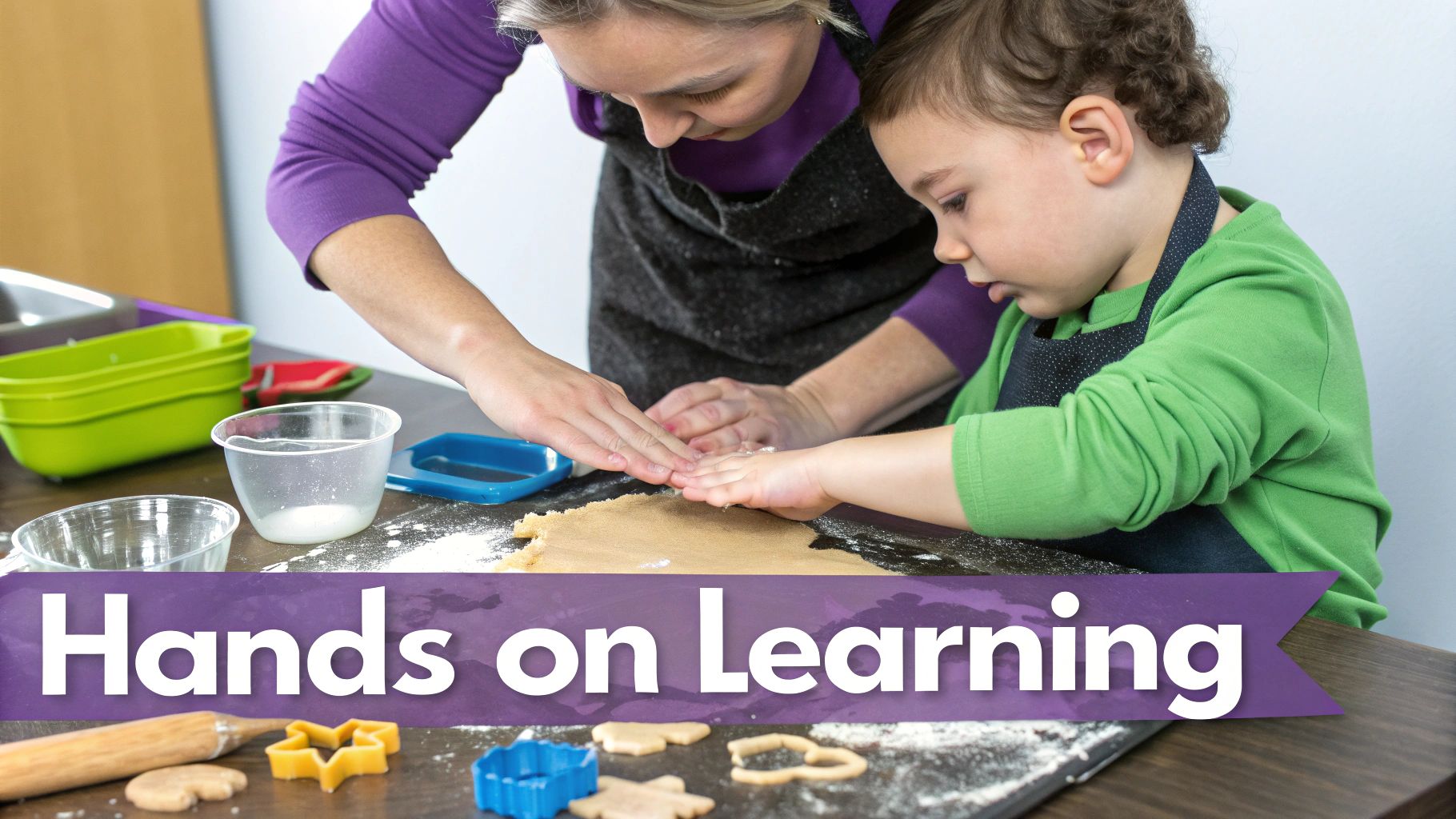
These hands on moments aren't just for fun, either. They are powerful tools for building crucial fine motor skills, sparking critical thinking, and making abstract ideas feel real and concrete. Think about it: when a child feels the texture of playdough while forming a letter, they build a much stronger connection in their brain than if they just saw that same letter on a page.
You don't need fancy manipulatives to teach math, it's already all over your home, especially in the kitchen! Baking cookies together can easily become a delicious lesson in measurements, fractions, and following steps in order. As you scoop and level the flour, your child is learning about volume in a way that truly sticks.
You can weave these real world math lessons throughout your entire day.
Activities like these make numbers feel friendly and useful. It shows our little ones that math is a practical tool for exploring God’s wonderfully orderly creation.
Bringing language arts to life is all about making words a multi sensory experience. Instead of just tracing letters on a worksheet, let your child feel them. A shallow tray filled with salt, sand, or even sprinkles makes a wonderful surface for practicing letter formation with their fingers.
When you make learning an interactive story, you invite your child into the narrative. Acting out a favorite picture book or a Bible story helps them internalize the sequence of events and understand character emotions on a deeper level.
This kind of play builds a rich, solid foundation for literacy. It connects the sounds of words with the joy of creating and expressing themselves, which is how a lifelong love for stories truly begins.
For a kindergartener, science is simply about observing and wondering about God’s creation. A simple nature journal, where they can draw a picture of a flower they saw or a bug they found, encourages them to look closely and appreciate the world around them.
When it comes to art, the focus should always be on the process, not the final product.
These simple, budget friendly ideas can transform everyday moments into powerful learning opportunities. They help you craft a curriculum where learning isn't just something you do, but a beautiful, natural part of how you live life together.
A gentle and effective homeschool curriculum for kindergarten is so much more than just books and activities. The real heart of your homeschool is the environment you create, that atmosphere of love, grace, and connection that makes your child feel safe, cherished, and ready to learn. This nurturing space is where their spirit can truly flourish alongside their mind.
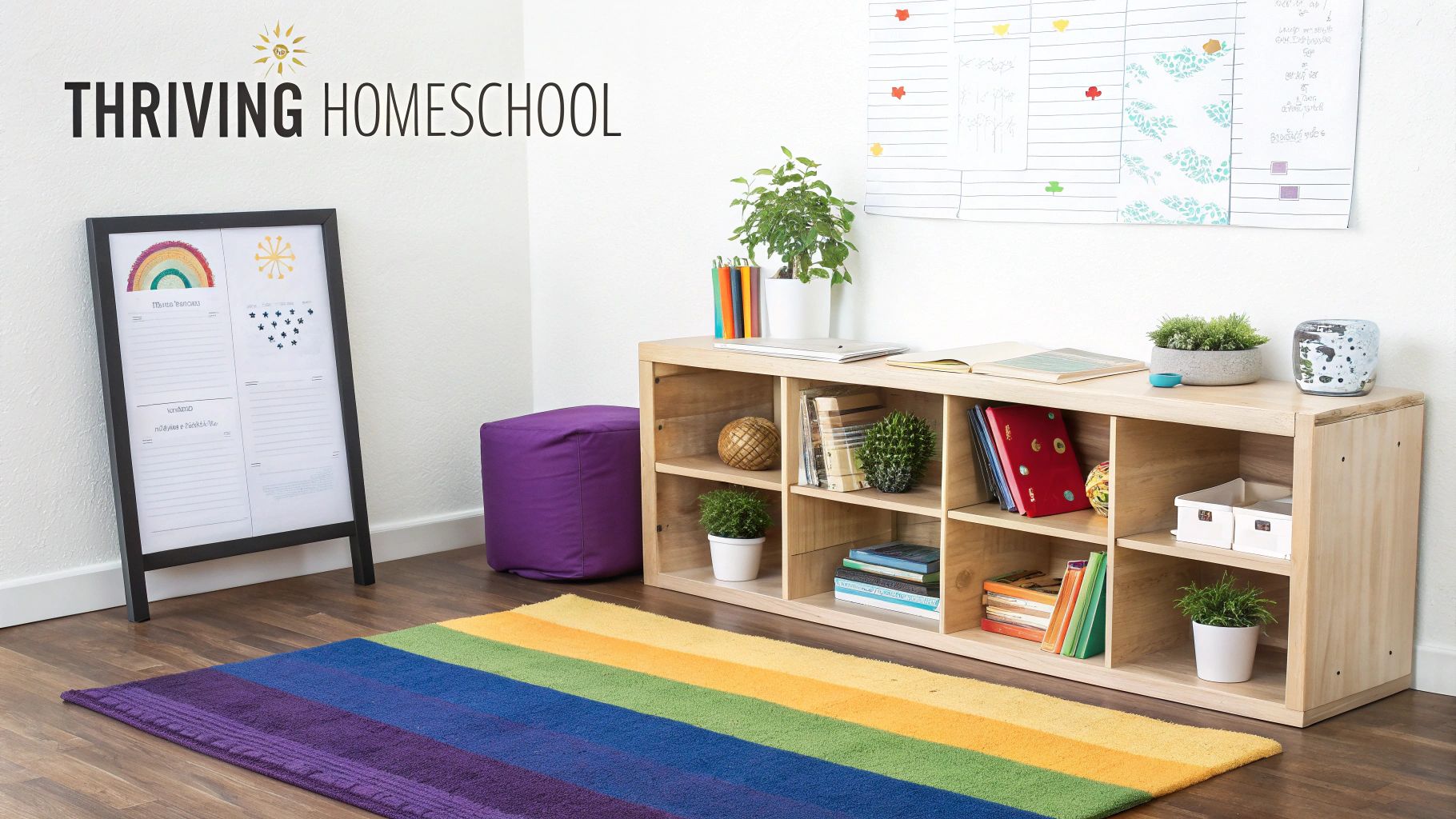
This means focusing on gentle discipline that teaches and guides rather than punishes. It also means establishing simple, predictable routines that bring a sense of security and peace to your child’s day. A peaceful home is the fertile ground where the seeds of learning can take root and grow strong.
Integrating your faith isn't just about a morning Bible lesson. It’s about seeing and acknowledging God’s hand throughout your entire day, from the breakfast table to bedtime prayers. This approach helps your child develop a natural, authentic relationship with the Lord that feels like a part of them, not just a subject they study.
You can do this in the simplest of ways:
This constant, gentle weaving of faith into the fabric of your day helps build a lasting, Christ centered worldview.
Kindergarteners thrive on predictability. It makes them feel safe. A simple, consistent routine helps them feel secure because they know what’s coming next. This doesn't need to be a rigid, minute by minute schedule, but a gentle rhythm that anchors your day in connection and peace.
When behavior challenges arise, as they always do, gentle discipline focuses on understanding the heart behind the action. It's a chance to teach, not to punish.
Your response to your child’s misbehavior is one of your greatest teaching tools. Approach these moments with prayerful compassion, aiming to guide their heart toward repentance and restoration, not just compliance.
Creating an organized and peaceful learning space can also significantly reduce behavioral issues. For some practical ideas on setting up your space to create an inviting atmosphere, you can explore our guide on playroom organization.
You don't need a huge budget to create a rich learning environment. Many families are discovering the joy and freedom of a simpler, more affordable approach to home education. This trend is actually growing globally. In Australia, for instance, the number of registered homeschoolers shot up by 105% over eight years, growing from around 21,437 in 2019 to 45,858 by 2024, with kindergarten aged children making up a big part of that increase. You can read more about homeschooling trends on eduww.net.
You can provide an excellent, engaging education with simple, accessible resources.
Budget Friendly Homeschooling Tips
By cultivating a nurturing environment, you’re doing so much more than just teaching academics. You are shaping your child's heart and creating a home where learning and love can grow side by side.
Of course. Here is the rewritten section, crafted to sound completely human written and natural, following the voice and style of the provided examples.
Embarking on this beautiful homeschooling journey can feel a little overwhelming at times, and that’s completely normal. As you begin planning your gentle homeschool curriculum for kindergarten, questions are bound to pop up. My hope is to offer some reassurance and practical advice for the most common concerns I hear from parents, leaving you feeling confident and joyful about the wonderful year ahead.
So many of us wonder if our child is truly on track, especially without the structure of formal tests and grades. In a gentle homeschool environment, you are the expert on your child. I promise, you will see progress every single day in ways a test could never measure.
Instead of looking for a score on a piece of paper, start looking for the signs of authentic learning that are already happening all around you. Is your child asking more questions? Are they joyfully telling back a story you just read together? Do they point out letters on a sign at the grocery store? These are the real markers of progress in kindergarten.
You can keep a simple, beautiful record of their learning in ways that feel much more natural and meaningful:
Trust the process. A child who is loved, read to, and given ample time to play and explore is a child who is learning. Your consistent, loving presence is the most powerful educational tool you have.
This gentle approach allows you to see the whole child, not just a snapshot of their academic performance. It celebrates their unique pace and fosters a genuine love for discovery that will last a lifetime.
Ah, the socialization question! It’s one of the first things people ask and a frequent concern for new homeschooling families. The truth is, homeschooling provides incredibly rich and varied opportunities for social interaction in real world settings. The idea that homeschoolers are isolated is truly a misconception.
In fact, homeschooled children often have more chances to interact with people of all ages, toddlers, teens, and adults, not just a classroom full of same age peers.
Opportunities for Social Connection
These interactions help children develop strong communication skills, empathy, and the ability to relate to a diverse group of people in a natural way.
In a world filled with digital distractions, it’s such a worthy goal to cultivate your child’s ability to find joy in the real world. A kindergarten year rich in hands on experiences is the perfect way to build a foundation for a healthy relationship with technology later on.
The key is to create an inviting environment filled with better alternatives. When a child is surrounded by good books, open ended toys, art supplies, and the freedom to explore outdoors, they are far less likely to seek out a screen.
Ultimately, your focused attention is the most engaging thing in their world. Reading a story together, going on a nature walk, or baking cookies will always be more memorable and meaningful than a cartoon. By filling your days with connection and wonder, you are giving your child the beautiful gift of an unplugged childhood.
At Motherhood and Homemaking, we are here to walk alongside you on this incredible journey. We provide practical, faith based resources to help you create a home filled with love, laughter, and learning. Explore our site for more encouragement and tools to help you thrive. Visit us today at https://motherhoodandhomemaking.com.