Gentle Homeschool Curriculum for Kindergarten
A gentle, Christ centered homeschool curriculum for kindergarten is less about rigid academics and more…

If the very idea of creating a homeschooling a preschooler schedule makes you feel a little stressed, I want you to take a deep breath and change the goal with me. This isn’t about trying to copy a formal classroom timeline. It’s about crafting a gentle, predictable rhythm that nurtures your child’s natural curiosity and makes learning feel just like play.

Forget the pressure of a minute-by-minute plan. When I first started this journey, I made the mistake of trying to impose a very strict “school” structure on our days. I had timed blocks, specific outcomes, the whole nine yards. It ended in frustration for both me and my little one.
The truth is, preschoolers thrive on predictability, not rigidity.
Shifting my mindset from a strict ‘schedule’ to a flowing ‘rhythm’ was a complete game-changer for our home. It transformed our days from chaotic and stressful to connected and joyful. A rhythm simply provides a sequence of events. We always have a story after breakfast, then we play, without being chained to the clock. This approach respects your child’s natural pace and attention span, which, as you know, can vary wildly from one day to the next.
A successful preschool homeschool experience is built on a foundation of peace, not perfection. It’s all about creating a predictable flow that helps your child feel secure and ready to learn, allowing you to lean into their interests and meet them right where they are.
This approach brings so many good things:
The most effective homeschooling a preschooler schedule is one that serves your family’s unique needs, not the other way around. It’s about building a framework for your day that is sturdy enough to provide security but flexible enough to allow for grace.
This growing preference for flexible, family-centered education is part of a larger movement. Globally, homeschooling is growing by 2% to 8% annually as more parents seek educational paths that align with their family values, especially during these crucial preschool years. You can find more insights about this trend over at Mastermind Behavior.
Your homeschool rhythm is your unique opportunity to create a peaceful, life-giving atmosphere where your child can truly flourish.
When you’re trying to create a daily rhythm that feels both peaceful and purposeful, it helps to start with a few key “anchors” that give your day structure. Think of these as the sturdy pillars that the rest of your day can flow around gracefully. Instead of a rigid, minute-by-minute plan, you’ll have a predictable sequence that brings comfort and security to your little one.
These building blocks aren’t about cramming every moment with structured learning. Far from it. This is about intentionally creating space for connection, play, and wonder. Let’s walk through the essential components that form the heart of a vibrant homeschool preschool schedule.
Morning Time, which some people call a Morning Basket, is such a beautiful way to begin your day together with intention. It really doesn’t need to be long or complicated—15-20 minutes is a perfect starting point for this age. This is your chance to connect before the day gets busy, filling your child’s heart and mind with truth and beauty.
For us, Morning Time is a simple, cozy gathering on the couch. Here’s what it often looks like:
This gentle start anchors our homeschool day in what matters most—our faith and our connection with each other. It has quickly become a cherished part of our routine.
After a cozy time of connection, the most important “work” a preschooler can possibly do is play. Free, child-led play is how young children process the world around them, solve problems, and let their creativity blossom. Your role here is less about directing the play and more about creating an inviting environment that sparks their imagination.
A well-organized, accessible play space is your greatest tool. When children can easily see and reach their toys, they are far more likely to engage in deep, independent play, giving you precious time to tend to other things.
Setting up your space for success is absolutely key. I try to keep toys in low, open baskets and rotate them every few weeks to keep things fresh and interesting. You can find some fantastic inspiration for setting up an engaging environment in our guide to simple playroom organization. This one simple step can naturally support your entire homeschooling rhythm.
To give you a clearer picture, here’s a breakdown of the kinds of things that can anchor your daily rhythm.
Activity Block | Core Purpose | Example Activities |
Morning Time | Connection, Faith, Beauty | Prayer, Bible story, song, read-aloud |
Child-Led Play | Creativity, Problem-Solving | Building with blocks, dress-up, LEGOs |
Hands-On Activity | Fine Motor, Sensory Input | Play-doh, painting, pouring water |
Outdoor Time | Gross Motor, Exploration | Nature walk, playground, digging in dirt |
Quiet Time | Rest, Independent Focus | Looking at books, listening to audio stories |
Practical Life | Skill-Building, Contribution | Helping with laundry, setting the table, stirring batter |
Remember, you don’t need to do all of these every day! Think of it more as a menu of options to choose from.
Beyond free play, it helps to have a mental menu of simple, hands-on activities. This keeps you from feeling stuck or wondering, “What should we do now?” You definitely don’t need to do all of these every single day! Just pick one or two that fit your child’s energy and, just as importantly, your own capacity for that day.
Sometimes, seeing a concept in action makes all the difference. To help you picture how a gentle rhythm can work in real life, I’m sharing two sample flows that I have personally used and absolutely loved in our own homeschool.
Think of these less as rigid templates and more as starting points. You can tweak them, combine them, and adapt them to fit the unique needs of your family.
The first is a more structured (yet still very flexible) rhythm, perfect for those days when you’re all at home and craving a bit of predictable sequence. The second is what I call a “looping” rhythm, which has been an absolute lifesaver for me on busy days filled with appointments, errands, or juggling the needs of multiple children.
This rhythm provides a predictable flow for your day without being chained to the clock. If your child is completely absorbed in building a magnificent block tower, let them play! You can simply move the read-aloud to later. The real goal is connection and joyful learning, not just checking boxes on a to-do list.
Morning Flow:
Afternoon Flow:
A gentle at-home rhythm acts as a comforting guidepost for your day. It tells your child what’s coming next, which fosters a deep sense of security and can greatly reduce those transition-related meltdowns, making your homeschooling a preschooler schedule feel so much more peaceful.
Let’s be real—some days are just plain chaotic. On days when you have errands, appointments, or co-op, a time-based schedule is nearly impossible to follow. This is where a looping rhythm saves the day.
You simply create a short list of your core activities and “loop” through them in order whenever you find pockets of time.
This visual shows a simple loop focusing on three core preschool activities: Read, Play, and Outdoors.
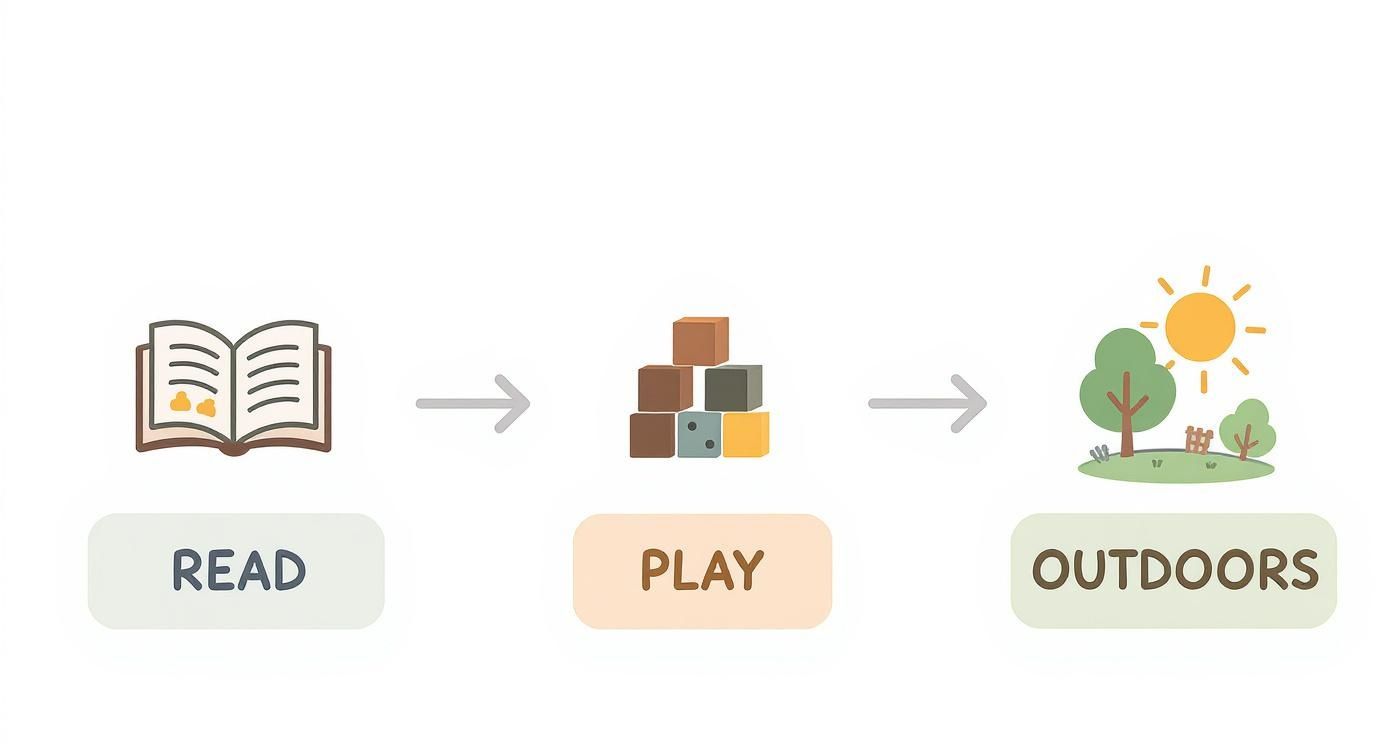
The idea is that the order provides the structure, not the time of day.
You might do a read-aloud in the car while waiting for an appointment, have outdoor time at the park between errands, and then pull out a hands-on activity when you finally get home. You just do the next thing on your list.
Here’s a simple loop you could jot down on a sticky note and put on your dashboard:
This approach completely removes the pressure of “getting behind.” You just pick up right where you left off. Honestly, this has been the single most helpful tool for keeping a sense of peace and intention in our homeschooling a preschooler schedule, especially during those busy seasons of life. It’s all about grace-filled consistency.

Moving from a beloved activity like painting to something less exciting, like cleanup time, can feel like navigating a minefield. For a preschooler, abruptly ending their play feels jarring and can easily trigger big emotions. This is where having a few gentle, predictable transition strategies in your back pocket makes all the difference.
These small tools provide the heads-up your child needs to mentally prepare for what’s coming next, dramatically reducing resistance. The goal isn’t to control them, but to connect with them and guide them lovingly through the flow of the day. A little preparation goes a long way in keeping the peace.
Predictability is a preschooler’s best friend. When they know what to expect, they feel safe and secure, which is the foundation for cooperation. Instead of issuing abrupt commands, try incorporating one of these simple, connecting strategies into your daily rhythm.
Here are a few that have worked wonders in our home:
These little rituals make your expectations clear and consistent. When big feelings do bubble up, it’s often a sign of overwhelm rather than defiance. For more guidance on this, our post on how to handle toddler tantrums with patience and grace offers gentle parenting tips that can help.
Beyond the moment-to-moment transitions, the most powerful tool for a peaceful day is establishing simple morning and evening routines. These act as predictable bookends to your day, creating a framework of security that helps everything in between run more smoothly.
A morning routine doesn’t have to be complicated at all. It could be as simple as: wake up, snuggles and prayer, get dressed, eat breakfast.
Likewise, an evening routine brings closure and calm: dinner, tidy up, bath time, read stories, prayer, and bedtime.
These anchors provide a deep sense of security, helping your child know what’s coming next. This dramatically reduces friction and makes your entire homeschooling a preschooler schedule flow with more peace and less struggle for everyone.
Let’s be honest for a minute. Homeschooling a preschooler doesn’t happen in a quiet, isolated bubble. It happens right alongside cooking dinner, folding laundry, and managing the million other tasks that keep our homes running.
It’s one thing to create a beautiful rhythm on paper, but making it work in the beautiful mess of real life requires a whole lot of grace and a few practical shortcuts.
The good news? This isn’t about adding more to your already full plate. Instead, these tips are about finding simple, intentional ways to weave learning and faith into the things you’re already doing. It’s about working smarter, not harder, and leaning on God’s strength to accomplish what truly matters.
So much of a preschooler’s learning comes from simply participating in real life with you. Your daily homemaking tasks are actually rich opportunities for connection and skill-building. You just have to know how to look for them!
These small moments add up, transforming mundane chores into meaningful learning experiences—without adding a single minute of prep time to your day.
Motherhood is a ministry of constant interruption. Instead of fighting it, learn to see the interruptions as the ministry itself. Finding learning in the laundry pile is a perfect example of this grace-filled approach.
A little bit of preparation can dramatically reduce the friction in your day and help your homeschool rhythm flow more smoothly. When supplies are easy to grab and meals are planned, you free up so much mental energy.
Try creating a simple “activity caddy” with crayons, paper, and play-doh that you can quickly pull out when you need a few minutes. A little time spent meal prepping on the weekend can also save you countless hours during the week. For more ideas on structuring your days with intention, check out our guide for creating a faith-based routine for moms.
This approach has become increasingly relevant as more families embrace homeschooling. In the United States, the number of homeschooled students grew from about 2.5 million in 2019 to 3.7 million by 2021, with many parents seeking educational options that integrate better with family life. You can discover more insights about this growing trend over at Brighterly.
Finally, one of the most practical tips for any busy mom is to build rest into your weekly rhythm. A true Sabbath is not a luxury; it’s a command and a gift. It’s a day to intentionally set aside the to-do lists and simply delight in God and your family.
This intentional rest refuels you for the week ahead, protecting you from burnout and keeping your heart centered on Christ. A well-rested mom is a more patient, joyful, and effective teacher. Your homeschooling schedule isn’t just about the daily flow, but the entire weekly rhythm of work and rest.
As you start to map out your family’s gentle rhythm, it’s only natural for questions to bubble up. You’re definitely not the first mom to wonder about the little details of making this work! Let’s walk through some of the most common concerns together, so you can feel confident and joyful in your unique approach.
This is your family’s journey, and feeling equipped to handle the day-to-day is the key to truly loving it.
First things first, let go of any idea that you need to replicate a six-hour school day. For preschoolers, the sweet spot for any kind of parent-led, focused activity is just 1-2 hours a day. And even that time is best broken down into tiny, bite-sized chunks of 10-15 minutes each. A little one’s attention span is short, and honoring that is one of the most important things you can do.
The rest of the day is simply learning as you live—through free play, snuggling up with stories on the couch, “helping” you in the kitchen, and exploring God’s creation outside. It’s all about the quality of your connection and the consistency of your rhythm, not about clocking a certain number of hours.
Take a deep breath, mama. This is completely normal preschool behavior! It’s their job to test boundaries and follow their own powerful, in-the-moment interests. Instead of letting it become a power struggle, try to see their resistance as a clue.
Are they tired? Hungry? Or just completely captivated by the dust bunnies under the sofa right now? You can try to gently redirect them, or you can simply pivot.
If they flat-out refuse the beautiful craft you spent time preparing, maybe it’s a signal that their body is craving a chance to run and jump outside. Your rhythm is a guide, not a contract you’ve both signed in permanent marker. Flexibility is your superpower here.
Absolutely not. While some families find a pre-made curriculum helpful, it is not at all a requirement for a rich, effective, and beautiful preschool experience at home. At this tender age, the very best learning tools are already right at your fingertips.
Your most powerful resources are simple things like:
Honestly, your loving presence and a stack of good books can be your entire curriculum. It will be more than enough to help your child thrive.
This is the ultimate homeschool challenge, and it requires so much grace for yourself. My best piece of advice is to use the baby’s precious naptime for any activity that requires your focused, one-on-one attention with your preschooler.
For all the other times, learn to embrace group activities. Read stories to everyone at once. Let the toddler “paint” with a cup of water and a brush on some construction paper while your preschooler uses real watercolors. Another lifesaver can be a special “toddler-only” activity box that you bring out just during your focused preschool time.
Here at Motherhood and Homemaking, we’re here to walk alongside you with grace-filled encouragement and practical tips for every season of your journey. Visit us for more resources on creating a peaceful, Christ-centered home.